AI search engines are fundamentally changing how people discover brands. Unlike traditional SEO where you optimize for ranking positions, AI visibility requires getting your brand woven into the actual responses that ChatGPT, Claude, Perplexity, and other AI models generate. The challenge? Most marketers are still applying old SEO playbooks to this new landscape.
Think of it like this: In traditional search, you compete for spots on page one. In AI search, you're competing to be the answer itself—the brand that gets mentioned when someone asks ChatGPT for recommendations or queries Perplexity about industry solutions.
This guide covers seven proven best practices for improving your AI search visibility—from structuring content that AI models prefer to cite, to monitoring where and how your brand appears across different AI platforms. Whether you're seeing zero mentions or inconsistent visibility, these strategies will help you systematically improve how AI models perceive and recommend your brand.
1. Structure Content for AI Citation Patterns
The Challenge It Solves
AI models don't browse your website the way humans do. They scan for clear, extractable information that can be confidently cited in responses. When your content is buried in long paragraphs or lacks authoritative statements, AI models simply move on to sources that present information more clearly.
The result? Your expertise exists, but AI can't easily extract and cite it. You become invisible not because your content lacks quality, but because it lacks structure.
The Strategy Explained
Structure your content with definition-style paragraphs that clearly state what something is, why it matters, and how it works. AI models excel at extracting information formatted as authoritative statements rather than meandering explanations.
Start key sections with clear declarative sentences. Instead of "Many businesses have found success with this approach," write "This approach reduces customer acquisition costs by streamlining the onboarding process." The second version gives AI models quotable, citation-worthy content. Following content SEO best practices ensures your information is both valuable and extractable.
Use descriptive headers that signal content structure. Headers like "What Is X?" or "How X Works" help AI models quickly identify relevant sections when synthesizing responses about specific topics.
Implementation Steps
1. Audit your top-performing content and identify sections that could be reformatted with clearer topic sentences and authoritative statements.
2. Add definition-style paragraphs at the beginning of key sections that directly answer common questions in your industry.
3. Implement structured data markup (Schema.org) for key content types like FAQs, how-tos, and product information to make extraction even easier.
4. Create dedicated "What is" and "How does it work" sections for complex topics, formatted with clear headers and concise explanations.
Pro Tips
Front-load your most important information. AI models often extract from early paragraphs, so put your clearest, most authoritative statements near the top of sections. Avoid burying key insights three paragraphs deep where they're less likely to be discovered and cited.
2. Build Topical Authority Through Content Clustering
The Challenge It Solves
Publishing scattered articles on random topics might generate some traffic, but it doesn't establish your brand as an authority on anything specific. AI models look for comprehensive coverage when determining which sources to trust and cite for particular subject areas.
When your content is fragmented, AI models can't identify you as a go-to source. You become just another site with some information, rather than the authoritative resource on a specific topic.
The Strategy Explained
Content clustering means creating interconnected content hubs around core topics relevant to your business. Think of it as building a comprehensive knowledge base on specific subjects rather than publishing isolated articles.
A strong cluster includes a pillar page that provides a comprehensive overview of the main topic, supported by multiple detailed articles that dive deep into specific subtopics. These pieces link to each other, creating a web of related content that signals deep expertise. This approach aligns with proven LLM optimization best practices that help AI models recognize your authority.
This interconnected structure helps AI models understand that your brand has comprehensive knowledge on the subject, making you a more reliable source to cite when users ask related questions.
Implementation Steps
1. Identify three to five core topics where you want to establish authority—these should align with your products, services, or expertise areas.
2. Create a pillar page for each topic that comprehensively covers the subject at a high level, serving as the hub for that content cluster.
3. Develop supporting articles that explore specific aspects, questions, or subtopics in detail, each linking back to the pillar page and to related articles.
4. Regularly expand each cluster with new content that addresses emerging questions or trends within that topic area.
Pro Tips
Map your clusters to actual questions people ask AI assistants. Use tools to identify common conversational queries in your industry, then structure your clusters to comprehensively answer those question patterns. This alignment increases the likelihood that AI models will surface your content when users ask similar questions.
3. Monitor Brand Mentions Across Multiple AI Platforms
The Challenge It Solves
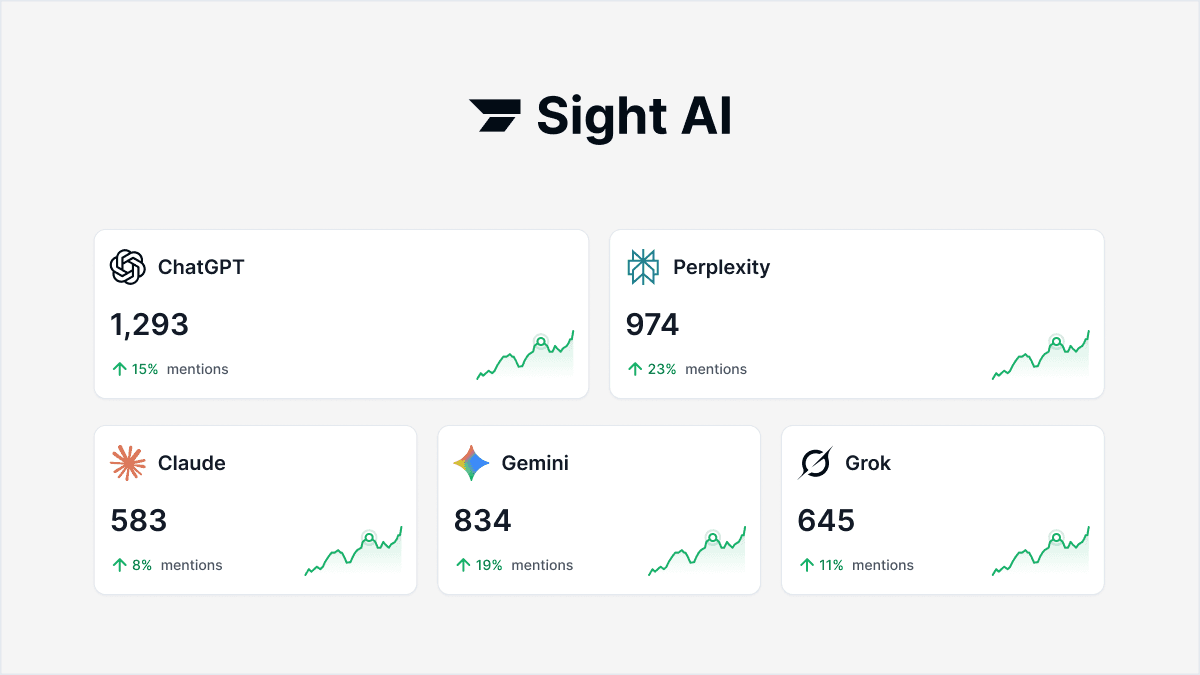
You can't improve what you don't measure. Many brands assume they have consistent AI visibility, only to discover they're mentioned frequently by ChatGPT but completely absent from Claude or Perplexity responses.
Each AI platform has different training data, citation patterns, and information sources. Without systematic monitoring, you're flying blind—unable to identify which platforms need attention or track whether your optimization efforts are working.
The Strategy Explained
Systematic AI visibility monitoring means regularly checking how your brand appears across multiple AI platforms, tracking the context of mentions, and identifying patterns in when and why you get cited versus competitors.
This goes beyond vanity searches. You need to track mentions across different query types—direct brand searches, category questions, comparison queries, and recommendation requests. The goal is understanding your visibility footprint across the entire AI search landscape.
Effective monitoring reveals gaps and opportunities. You might discover that AI models mention you for one product line but ignore another, or that you appear in technical queries but not commercial ones.
Implementation Steps
1. Create a baseline measurement by testing key queries across ChatGPT, Claude, Perplexity, and other major AI platforms to see where your brand currently appears.
2. Develop a standard set of test queries including direct brand mentions, category questions, comparison requests, and recommendation queries relevant to your business.
3. Establish a regular monitoring schedule—weekly or biweekly—to track changes in visibility patterns and identify emerging trends.
4. Document the context of mentions, noting whether you're cited as a leader, an alternative, or in specific use cases to understand positioning.
Pro Tips
Track sentiment alongside visibility. It's not enough to know you're mentioned—you need to understand whether AI models describe your brand positively, neutrally, or with caveats. This sentiment analysis helps identify content opportunities to improve how AI models characterize your offerings.
4. Optimize for Entity Recognition and Association
The Challenge It Solves
AI models need to correctly understand what your brand is, what you do, and what topics you're associated with. When entity recognition is weak or confused, AI models might mischaracterize your business or fail to connect you with relevant queries.
This becomes especially problematic for brands with generic names, multiple product lines, or positioning that spans several categories. AI models might understand you exist but struggle to determine when you're relevant to cite.
The Strategy Explained
Entity optimization means strengthening the signals that help AI models correctly identify your brand and associate it with relevant topics, products, and expertise areas. This involves consistent branding, clear positioning statements, and strategic use of structured data.
Start with your core brand entity. Ensure your website clearly states what your company does, who you serve, and what problems you solve—using consistent language across all pages. This consistency helps AI models build a coherent understanding of your brand identity. Understanding what AI search engine optimization entails is crucial for this process.
Then extend to topic associations. If you want AI models to mention your brand when users ask about specific solutions or categories, you need content that explicitly connects your brand to those topics with clear, authoritative statements.
Implementation Steps
1. Implement Organization Schema markup on your website to provide AI models with structured information about your brand, products, and expertise areas.
2. Create a clear "About" page that definitively states what your company does, using the exact terminology you want AI models to associate with your brand.
3. Develop category pages or topic hubs that explicitly connect your brand to key solution areas, using consistent positioning language.
4. Ensure product descriptions and service pages clearly state what each offering is and what problems it solves, avoiding vague marketing language.
Pro Tips
Use consistent terminology across all content. If you describe your product as "AI-powered analytics" on one page and "machine learning insights" on another, you dilute entity associations. Pick your core positioning language and use it consistently to strengthen AI model understanding.
5. Prioritize Freshness and Regular Content Updates
The Challenge It Solves
AI models, particularly those with real-time information access, prioritize current content over outdated information. If your most comprehensive articles were published years ago and never updated, AI models may cite fresher sources instead—even if your content is more authoritative.
This creates a visibility gap where your best content gets ignored simply because it appears stale, while competitors with more recent (but potentially less comprehensive) content get cited instead.
The Strategy Explained
Freshness optimization means systematically updating your content to signal currency and ensuring new content gets indexed quickly so AI models can access it. This isn't about changing content for the sake of change—it's about maintaining accuracy and relevance.
Regular updates serve two purposes. First, they keep information accurate as your industry evolves. Second, they signal to AI models that your content is actively maintained and trustworthy. Both factors increase citation likelihood. Brands experiencing losing visibility in AI search results often find outdated content is the culprit.
Fast indexing ensures that when you publish new content or updates, AI models with real-time capabilities can access that information quickly rather than working from outdated cached versions.
Implementation Steps
1. Audit your top-performing content quarterly to identify sections that need updates based on industry changes, new data, or evolved best practices.
2. Implement automated indexing using IndexNow to notify search engines immediately when you publish new content or updates.
3. Add publication and update dates to all articles, making freshness signals visible to both AI models and readers.
4. Create a content calendar that schedules regular updates for pillar content and key authority pieces, ensuring they never become stale.
Pro Tips
When updating content, make substantial improvements rather than minor tweaks. AI models can detect meaningful updates versus superficial changes. Add new sections, incorporate recent developments, or expand explanations to signal genuine freshness rather than just changing dates.
6. Earn Citations Through Original Research and Data
The Challenge It Solves
AI models need authoritative sources when citing statistics, trends, or industry findings. If you only republish information from other sources, you become a secondary reference at best—easily bypassed in favor of original sources.
This limitation is particularly acute when AI models need to answer data-driven questions. Without original research to cite, your brand simply won't appear in responses that require statistical backing or industry insights.
The Strategy Explained
Publishing original research, proprietary surveys, or unique data analysis transforms your brand from a commentator into a primary source. When AI models need industry statistics or findings, they can cite your research directly.
This doesn't require massive research budgets. Even modest surveys of your customer base, analysis of your platform data, or systematic studies of industry trends can generate citable insights that AI models reference. Tracking your AI search visibility metrics helps you measure the impact of your research content.
The key is publishing findings in a clear, accessible format with specific data points that AI models can extract and attribute to your brand as the source.
Implementation Steps
1. Identify questions in your industry that lack good data or where existing research is outdated—these represent opportunities for original research.
2. Conduct surveys, analyze your platform data, or systematically study industry trends to generate unique insights.
3. Publish findings in dedicated research reports with clear methodology, specific statistics, and quotable conclusions.
4. Create summary blog posts that highlight key findings with clear attribution to your research, making it easy for AI models to extract and cite.
Pro Tips
Make your research methodology transparent and your data accessible. AI models are more likely to cite research that clearly explains how data was collected and analyzed. Include methodology sections and consider publishing raw data or detailed appendices to strengthen credibility.
7. Align Content with AI User Intent Patterns
The Challenge It Solves
People ask AI assistants different types of questions than they type into traditional search engines. Conversational queries, comparison requests, and recommendation-seeking questions dominate AI interactions—yet most content is still optimized for keyword-based search queries.
This mismatch means your content might rank well in Google but fail to appear in AI responses because it doesn't address the conversational, context-rich questions people actually ask AI models.
The Strategy Explained
AI intent alignment means creating content that directly answers the conversational questions, comparison queries, and recommendation requests that characterize AI search behavior. Understanding what search intent in SEO means helps you bridge the gap between traditional and AI optimization.
Conversational queries are longer and more specific: "What's the best email marketing platform for a small e-commerce business with limited technical skills?" rather than "email marketing software." Your content needs to address these detailed, context-rich questions.
Comparison and recommendation content becomes especially valuable because AI users frequently ask "Which is better?" or "What should I use for?" questions. Content that directly compares options or provides clear recommendations gets cited in these common query patterns.
Implementation Steps
1. Analyze actual questions people ask AI assistants in your industry by monitoring forums, social media, and customer support conversations for conversational query patterns.
2. Create comparison content that directly addresses "X vs Y" questions with balanced analysis and clear use-case recommendations.
3. Develop recommendation guides that answer "What's the best X for Y situation?" queries with specific, context-aware suggestions.
4. Format content to directly answer questions in the first paragraph, then expand with supporting details—mirroring how AI models structure responses.
Pro Tips
Use natural language in headers and subheaders that mirrors how people actually ask questions. Instead of "Email Marketing Platform Selection Criteria," use "How to Choose the Right Email Marketing Platform." This alignment helps AI models match your content to conversational queries.
Putting It All Together: Your AI Visibility Implementation Roadmap
Here's how to prioritize these best practices based on where you are in your AI visibility journey.
Start with monitoring to establish your baseline. You can't improve what you don't measure, so begin by understanding your current visibility across ChatGPT, Claude, Perplexity, and other platforms. This reveals which areas need the most attention.
Next, focus on content structure and topical authority. These foundational elements determine whether AI models can effectively extract and cite your content. Restructure your most important pages with clear, authoritative statements and begin building content clusters around your core expertise areas.
Then implement freshness signals through regular updates and automated indexing. Set up systems that keep your content current and ensure AI models access your latest information quickly. This ongoing maintenance prevents visibility decay over time.
Finally, invest in original research for long-term citation authority. While this requires more resources, proprietary data and unique insights create sustainable competitive advantages that compound over time as AI models increasingly reference your research.
Remember: AI search visibility isn't a one-time optimization project. It requires ongoing monitoring and adaptation as AI models evolve, training data updates, and user behavior shifts. The brands that systematically apply these practices will increasingly capture the recommendations that drive discovery in an AI-first search landscape.
Stop guessing how AI models like ChatGPT and Claude talk about your brand—get visibility into every mention, track content opportunities, and automate your path to organic traffic growth. Start tracking your AI visibility today and see exactly where your brand appears across top AI platforms.