The best AI search optimization tools fall into two groups: visibility trackers that show where ChatGPT, Perplexity, Claude, Gemini and Copilot mention (or ignore) your brand, and content tools that help you close those gaps. For most teams, the strongest setup pairs one AI visibility platform, such as Sight AI for prompt tracking, sentiment and gap analysis, with one content optimizer like Surfer SEO, Clearscope or Frase. The nine tools below are compared by what they track, which AI engines they cover, and what they cost.
Traditional rankings no longer guarantee discovery: generative engines answer a growing share of informational queries directly, and the brands they cite capture the attention. If you are new to the discipline, start with our explainer on what generative engine optimization (GEO) is, then use the comparison table and the selection criteria below to shortlist tools.
AI search optimization tools compared
| Tool | Category | Tracks AI mentions | Starting price |
|---|---|---|---|
| Sight AI | AI visibility + GEO content | Yes, multiple AI platforms | Contact, free trial |
| Perplexity Business | First-party publisher analytics | Perplexity only | Enterprise |
| Semrush AI Toolkit | SEO suite + AI Overviews | Google AI Overviews | $139.95/mo |
| Surfer SEO | Content optimization | No | $89/mo |
| Clearscope | Semantic content grading | No | $189/mo |
| MarketMuse | Content planning, gap analysis | No | Free tier; $149/mo |
| Frase | Briefs and answer engine optimization | No | $15/mo |
| AlsoAsked | Question research | No | Free tier; $15/mo |
| Schema Pro | Structured data (WordPress) | No | $79/yr |
Prices reflect published entry plans at the time of writing; verify on each vendor's site before buying.
How to evaluate an AI search visibility tool
- Engine coverage: Confirm which models are queried (ChatGPT, Perplexity, Claude, Gemini, Google AI Overviews/AI Mode, Microsoft Copilot). Coverage gaps mean blind spots.
- Prompt-level data: You need to see the actual prompts that trigger or miss your brand, not just an aggregate score.
- Competitor and gap analysis: The most actionable output is a list of prompts where competitors are cited and you are not.
- Historical data: AI answers vary run to run. Look for repeated sampling and stored history so trends are meaningful rather than noise.
- Sentiment and accuracy: Being mentioned negatively or with wrong facts can be worse than not being mentioned.
- Path to action: Tracking without a workflow (content briefs, publishing, indexing) leaves the gap open.
1. Sight AI
Best for: Comprehensive AI visibility tracking and GEO-optimized content generation in one platform
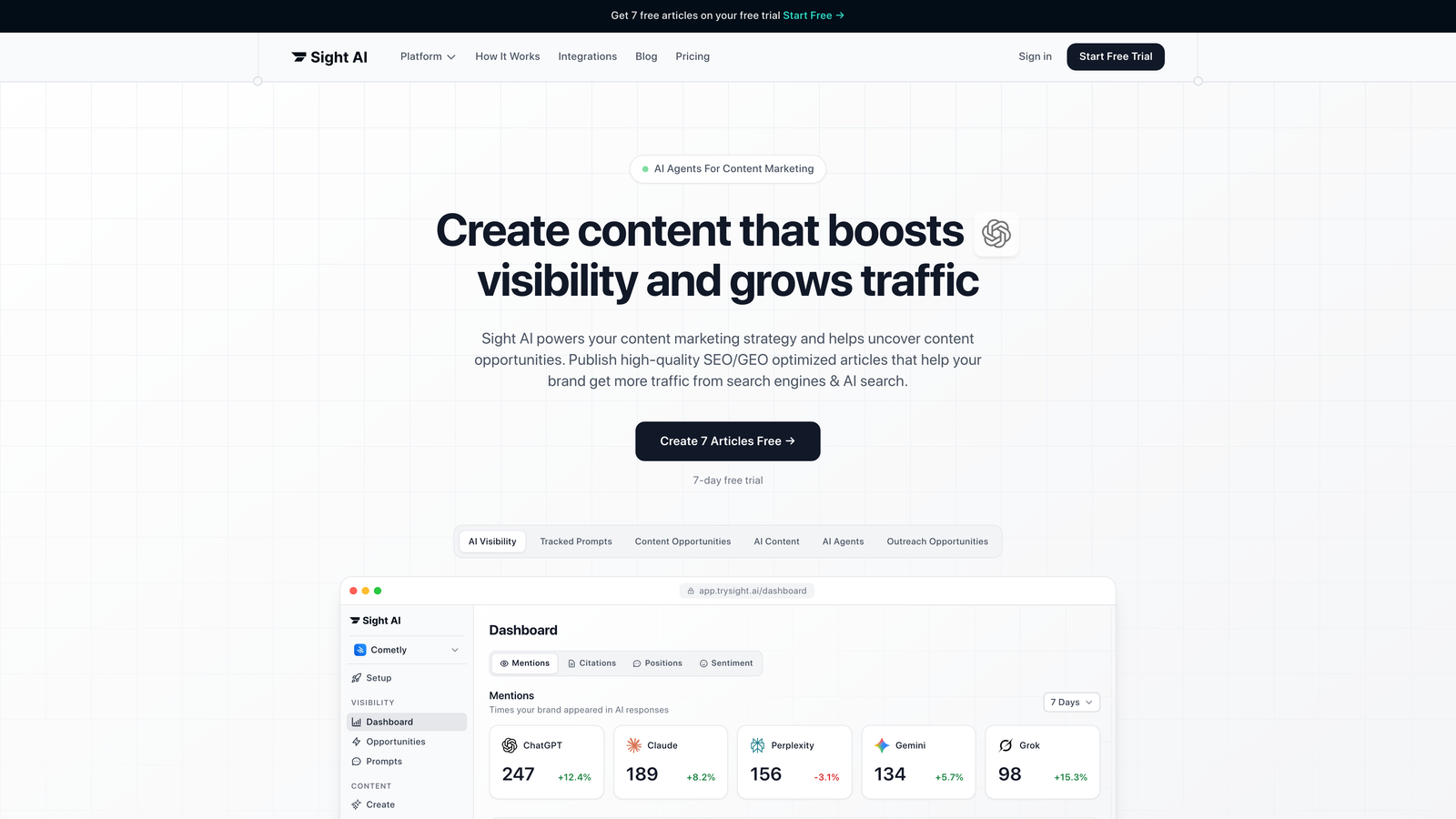
Sight AI is an all-in-one platform that monitors brand mentions across AI models while generating content optimized for AI discovery.
Where This Tool Shines
Sight AI solves the biggest challenge in AI search optimization: understanding how AI models actually perceive and mention your brand. Most tools focus on traditional SEO metrics, but Sight AI tracks your visibility across ChatGPT, Claude, Perplexity, and six other AI platforms simultaneously.
The platform's AI Visibility Score gives you a quantifiable metric for tracking improvement over time, complete with sentiment analysis that shows whether AI mentions are positive, neutral, or negative. This visibility extends beyond simple brand tracking—you can see which specific prompts trigger mentions of your brand and identify content gaps where competitors appear instead.
Key Features
AI Visibility Score: Quantitative tracking across 6+ AI platforms with sentiment analysis for each mention.
13+ Specialized AI Agents: Content generation system with agents trained for listicles, guides, explainers, and other formats optimized for both SEO and GEO.
Prompt Tracking: See exactly which user queries trigger AI models to mention your brand or competitors.
IndexNow Integration: Automated content indexing that notifies search engines immediately when you publish new content.
Autopilot Mode: Automated content publishing with CMS integration for hands-free content deployment.
Best For
Marketing teams and agencies managing multiple brands who need centralized AI visibility tracking. Particularly valuable for companies entering new markets where building AI awareness is as important as traditional search rankings. The content generation features make it ideal for teams that want to create and publish GEO-optimized content without manual intervention.
Pricing
Contact for pricing with free trial available. The platform combines visibility tracking and content generation, which typically require separate tools.
2. Perplexity Business
Best for: Publishers tracking citation performance within Perplexity AI's answer engine
Perplexity Business is a publisher analytics platform offering insights into how content gets cited in Perplexity's AI-generated answers.
Where This Tool Shines
Perplexity Business gives publishers direct access to citation analytics from one of the fastest-growing AI search platforms. Unlike third-party monitoring tools that approximate AI visibility, this platform provides first-party data directly from Perplexity's systems.
The publisher dashboard shows exactly when your content appears as a source in AI answers, which queries drive the most citations, and how your citation rate compares over time. This direct insight helps content teams understand which topics and formats Perplexity's AI finds most valuable. For a step-by-step setup that works without enterprise access, see our guide to tracking your brand's visibility on Perplexity AI.
Key Features
Citation Analytics: Track when and how often your content is referenced in Perplexity AI responses.
Query Pattern Insights: See which user questions lead to your content being cited as a source.
Publisher Dashboard: Centralized view of all your content's performance within Perplexity's ecosystem.
Competitive Benchmarking: Compare your citation rates against industry averages and competitors.
Best For
Publishers and media companies with substantial content libraries who want to optimize specifically for Perplexity AI. Most valuable for brands already seeing traffic from Perplexity and wanting to maximize their presence on the platform.
Pricing
Enterprise pricing with custom terms. Contact Perplexity's business team for access based on your publishing volume.
3. Semrush AI Toolkit
Best for: Established SEO teams adding AI Overview tracking to existing workflows
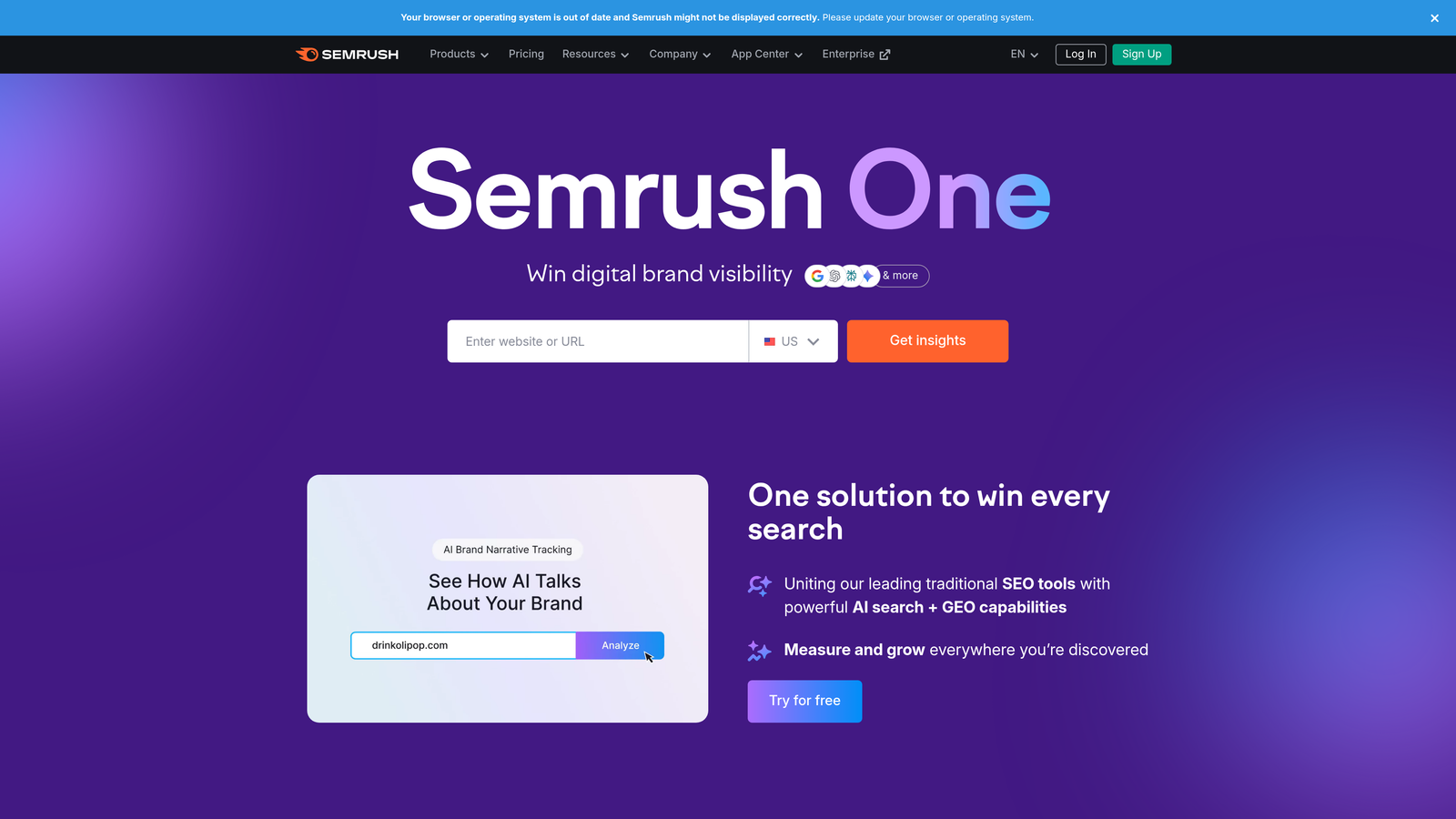
Semrush is a comprehensive SEO platform that has expanded to include dedicated AI Overview tracking and optimization features.
Where This Tool Shines
Semrush bridges traditional SEO and AI search optimization by integrating AI Overview tracking directly into its existing SERP analysis tools. Teams already using Semrush for keyword research and rank tracking can now monitor AI-generated results without switching platforms.
The platform identifies when Google's AI Overviews appear for your target keywords and shows which sources Google's AI cites. This helps you understand the competitive landscape for AI visibility while maintaining your existing SEO workflow.
Key Features
AI Overview Tracking: Monitor when AI-generated results appear in Google search for your target keywords.
Position Tracking for AI Results: See how often your content is cited in AI Overviews compared to competitors.
Content Optimization Suggestions: Recommendations for improving featured snippet eligibility, which often correlates with AI citation.
Competitive Analysis: Identify which competitors appear most frequently in AI-generated results.
Best For
SEO professionals and agencies with existing Semrush subscriptions who want to expand into AI search optimization. Works well for teams managing large keyword portfolios who need to prioritize which terms warrant AI optimization efforts.
Pricing
Starts at $139.95/month for the Pro plan, with AI-specific features available in Guru and Business tiers starting at $249.95/month.
4. Surfer SEO
Best for: Content teams optimizing individual articles for semantic relevance and topical coverage
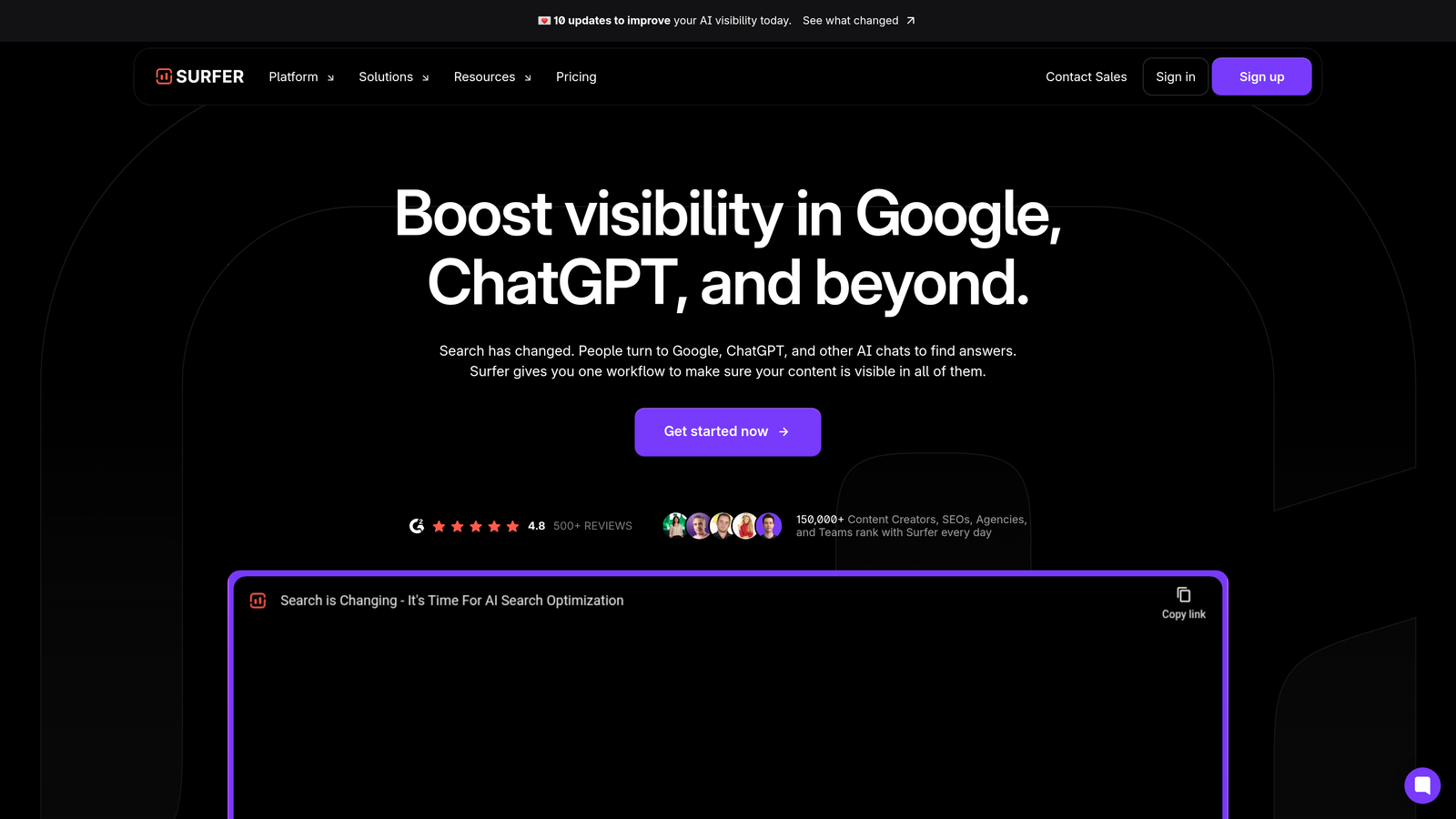
Surfer SEO is a content optimization platform using natural language processing to improve content structure for search and AI discovery.
Where This Tool Shines
Surfer SEO excels at analyzing top-performing content and providing actionable recommendations for matching that performance. The platform's NLP analysis identifies semantic patterns that both search engines and AI models favor—comprehensive topic coverage, clear content structure, and relevant entity mentions.
The real-time content editor scores your writing as you work, showing exactly which topics to add or remove. This immediate feedback helps writers create content that AI models can easily parse and cite, without requiring deep technical SEO knowledge.
Key Features
Real-Time Content Scoring: Live feedback on content quality based on NLP analysis of top-ranking pages.
SERP Analyzer: Identifies topical coverage patterns across high-performing content for any keyword.
Content Structure Recommendations: Suggests headings, paragraphs, and semantic elements that improve AI readability.
Integration Ecosystem: Works directly within Google Docs and WordPress for seamless content creation.
Best For
Content writers and small marketing teams who need guidance on creating comprehensive, well-structured content. Particularly useful for teams without dedicated SEO specialists who want to ensure their content meets both search engine and AI model standards.
Pricing
Starts at $89/month for the Essential plan with 30 content editor uses. Higher tiers offer more content analyses and team collaboration features.
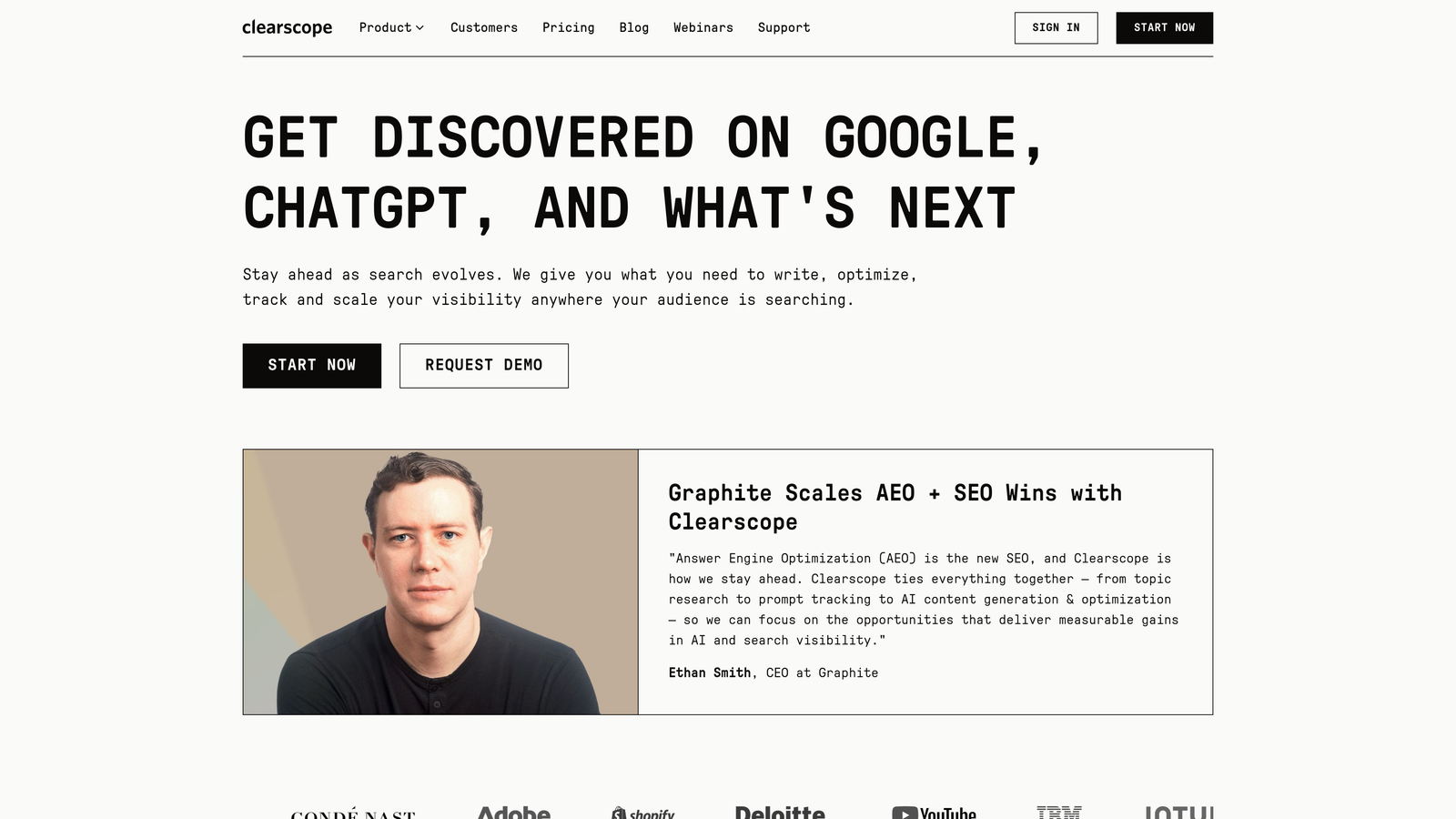
5. Clearscope
Best for: Enterprise content teams prioritizing semantic relevance and comprehensive topic coverage
Clearscope is an enterprise content optimization platform focused on semantic analysis and topical authority.
Where This Tool Shines
Clearscope takes a research-first approach to content optimization, analyzing not just keywords but the semantic relationships between concepts. This aligns perfectly with how AI models evaluate content—they look for comprehensive coverage of related topics, not just keyword repetition.
The platform's content grading system evaluates semantic relevance, giving you a clear target to hit before publishing. By ensuring your content covers all relevant subtopics and related concepts, you increase the likelihood that AI models will consider it authoritative enough to cite.
Key Features
Content Grading with Semantic Analysis: Scores content based on topical completeness and semantic relationships.
Keyword and Topic Recommendations: Identifies related concepts and entities that strengthen topical authority.
Competitor Content Analysis: Shows how your content compares to top-performing competitors on semantic coverage.
Integration Options: Works within Google Docs and WordPress for streamlined content creation.
Best For
Enterprise marketing teams and agencies managing high-volume content production where consistency and quality matter. Best suited for organizations with dedicated content strategists who can implement Clearscope's insights across multiple writers.
Pricing
Starts at $189/month for the Essentials plan. Enterprise plans with advanced features and higher usage limits require custom pricing.
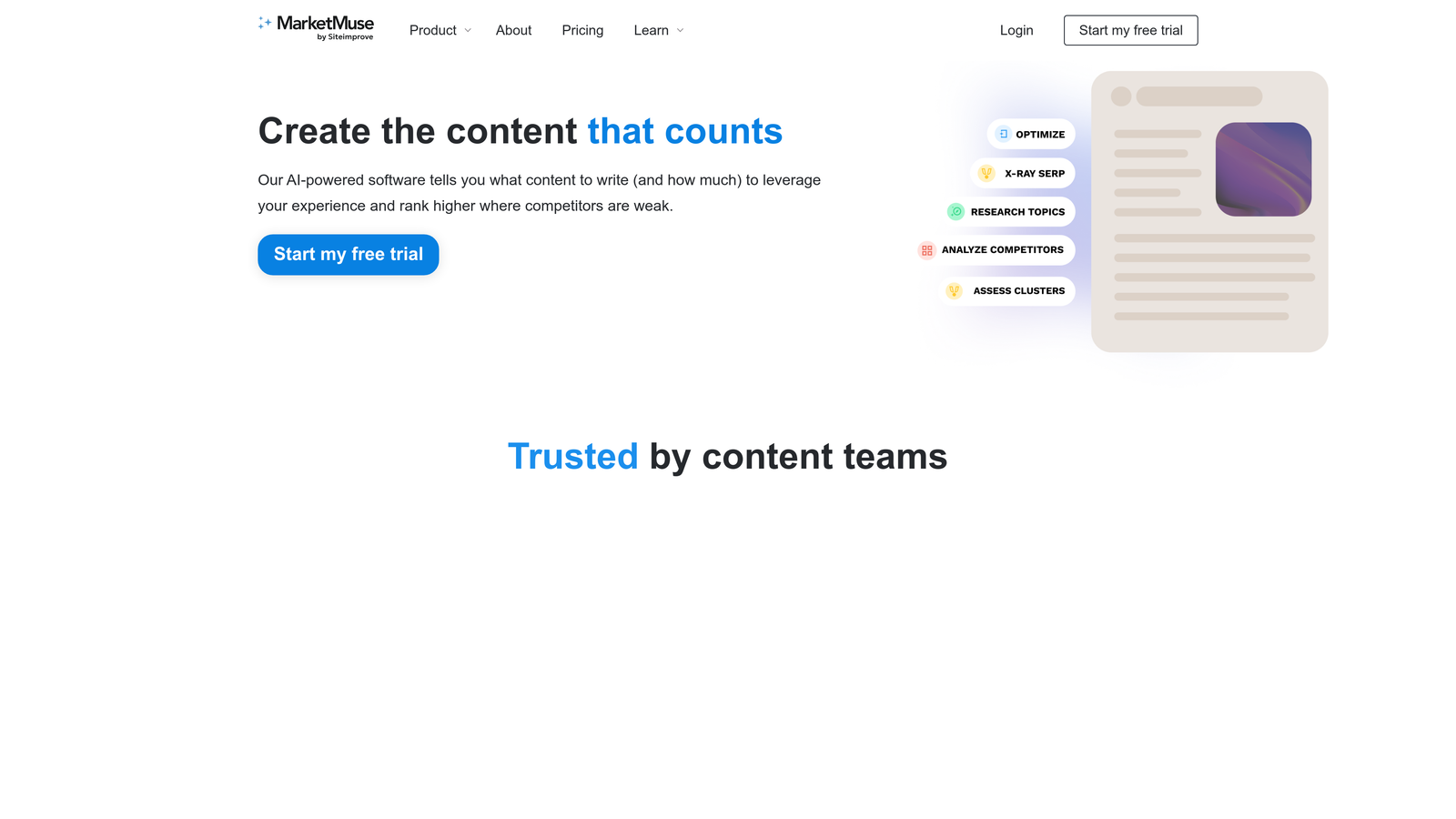
6. MarketMuse
Best for: Building topical authority through strategic content planning and gap analysis
MarketMuse is an AI-driven content planning platform that identifies content gaps and helps build comprehensive topical coverage.
Where This Tool Shines
MarketMuse approaches AI search optimization from a strategic level rather than focusing on individual articles. The platform analyzes your entire content inventory and identifies gaps where competitors have authority but you don't. This topical authority is exactly what AI models evaluate when deciding which sources to cite.
The topic modeling feature clusters related content together, helping you understand where you have strong coverage and where you're missing crucial supporting content. AI models favor sources with comprehensive coverage across related topics, not just isolated articles on individual keywords.
Key Features
Content Inventory and Gap Analysis: Identifies missing topics and weak coverage areas across your entire site.
Topic Modeling and Clustering: Groups related content to reveal topical authority strengths and weaknesses.
Authority Scoring: Quantifies your topical expertise compared to competitors for competitive benchmarking.
Automated Content Briefs: Generates research-backed outlines for filling identified content gaps.
Best For
Content strategists and SEO directors planning long-term content roadmaps rather than optimizing individual articles. Most valuable for established sites with existing content that needs strategic expansion to build topical authority.
Pricing
Free tier available with limited features. Paid plans start at $149/month for the Standard plan, with Team and Premium tiers offering advanced features and higher usage limits.
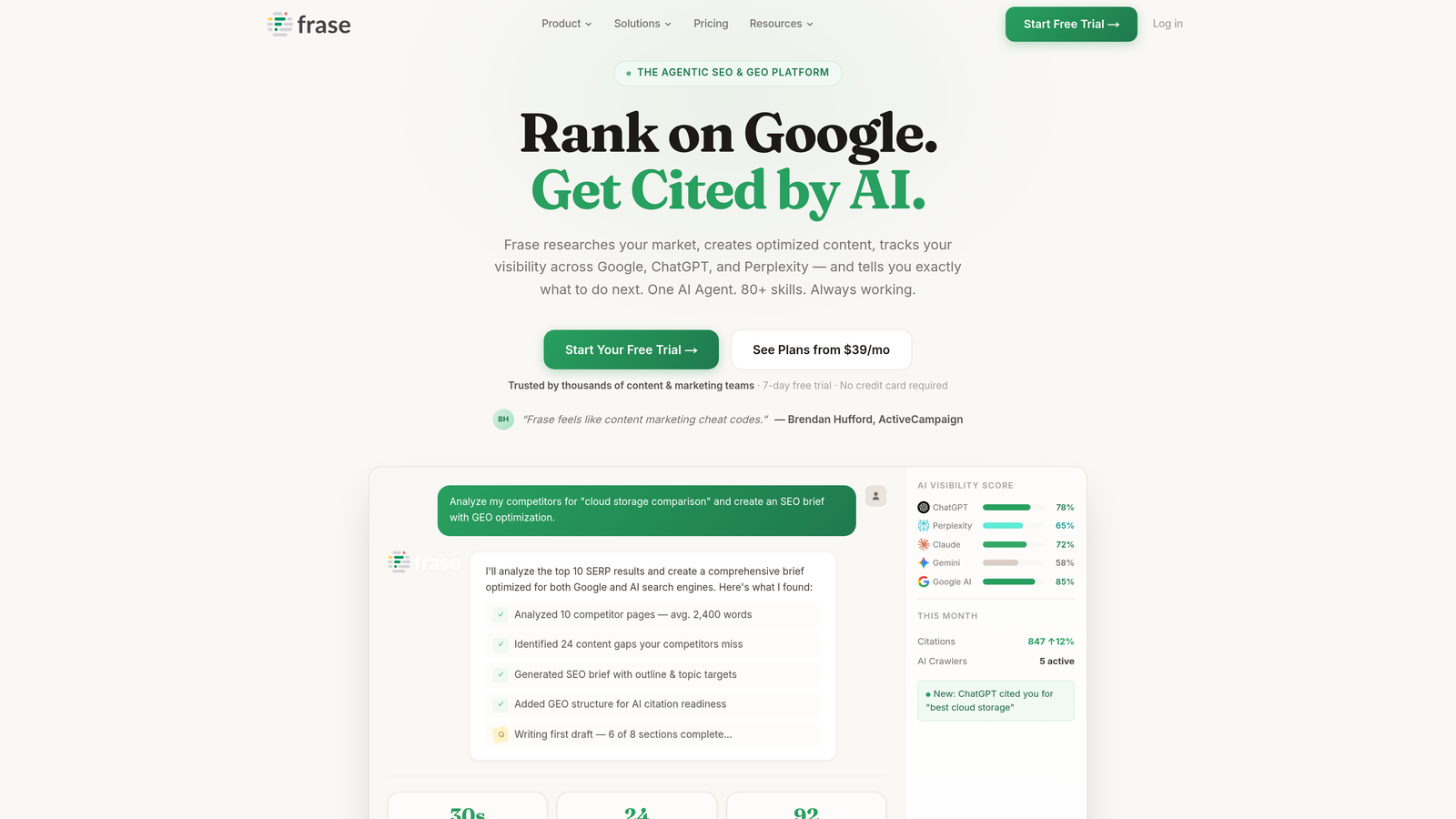
7. Frase
Best for: Research-driven content briefs and answer engine optimization
Frase is an AI content tool specializing in creating research-backed content briefs optimized for answer engines.
Where This Tool Shines
Frase automates the research phase of content creation by analyzing top-performing content and extracting the questions, topics, and structure that make it successful. This research-first approach aligns with how AI models evaluate content—they favor comprehensive answers to specific questions.
The answer engine optimization features specifically target the types of queries that AI models handle best: direct questions with factual answers. By structuring content around these question-answer patterns, Frase helps create content that AI models can easily extract and cite.
Key Features
AI-Generated Content Briefs: Automatically creates detailed outlines based on SERP analysis and competitor research.
Answer Engine Optimization: Identifies and structures content around questions that AI models commonly answer.
Question Research and Clustering: Groups related questions to ensure comprehensive topic coverage.
Content Optimization Scoring: Real-time feedback on how well your content addresses target questions.
Best For
Freelance writers and small content teams who need to quickly research and outline content. Particularly valuable for teams creating FAQ-style content or comprehensive guides where question coverage matters.
Pricing
Starts at $15/month for the Solo plan with one user seat. Team plans with collaboration features start at $45/month.
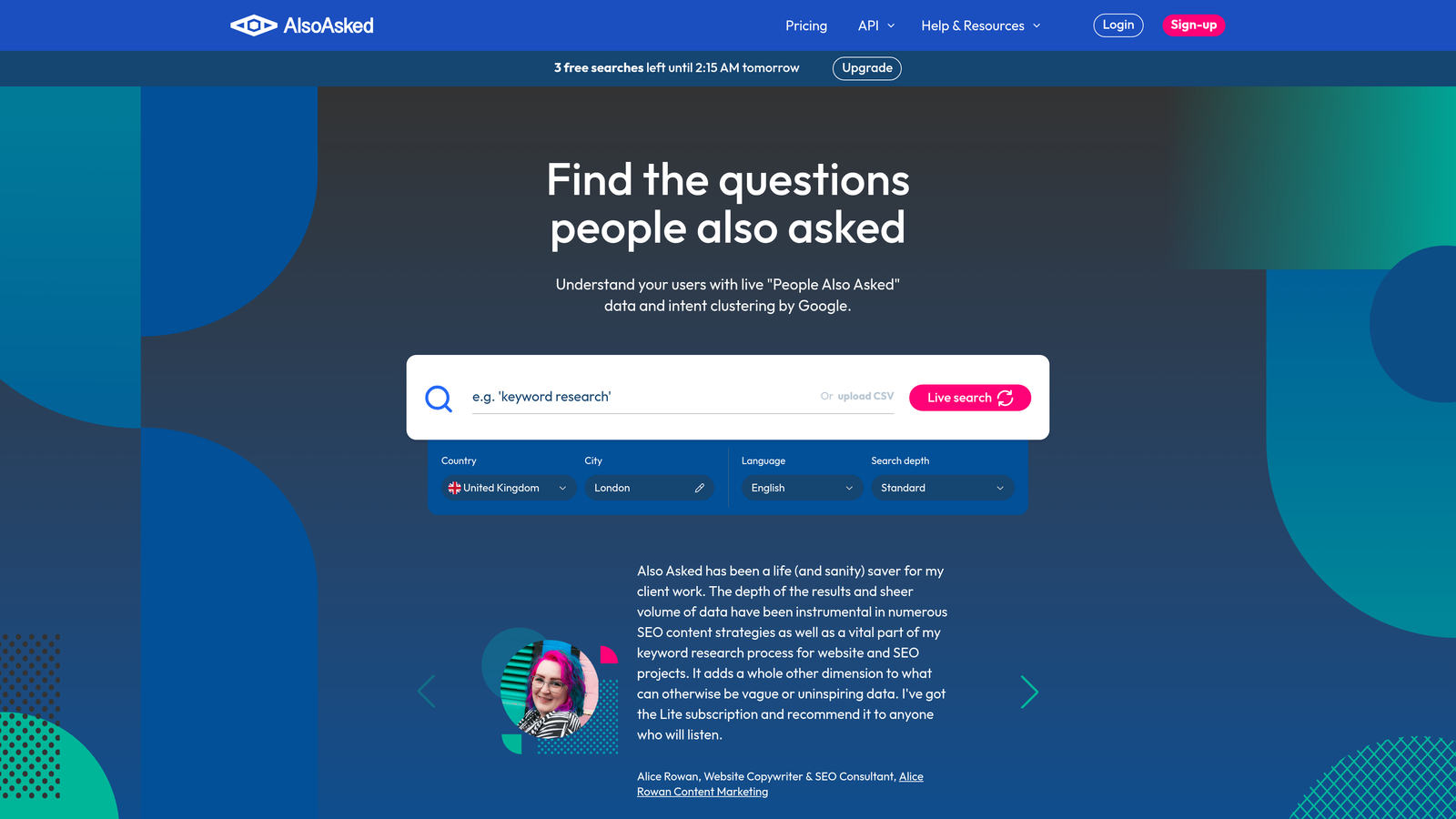
8. AlsoAsked
Best for: Question research and conversational content planning using People Also Ask data
AlsoAsked is a question research tool that visualizes People Also Ask data for planning conversational content.
Where This Tool Shines
AlsoAsked reveals the actual questions people ask about your topics, presented in a visual tree structure that shows how questions branch into related subtopics. This question-based approach mirrors how users interact with AI search engines—they ask conversational questions rather than typing keywords.
The visualization makes it easy to identify question clusters that deserve dedicated content. By creating content that directly answers these frequently asked questions in a structured way, you increase the likelihood that AI models will cite your content when users ask similar questions.
Key Features
People Also Ask Data Visualization: Interactive tree diagrams showing how questions relate and branch into subtopics.
Question Clustering by Topic: Groups related questions to identify comprehensive content opportunities.
Export Options: Download question data for content planning and brief creation.
Multi-Language and Region Support: Research questions across different markets and languages.
Best For
Content planners and strategists building FAQ sections or comprehensive guides. Especially useful for teams creating content hubs around specific topics where answering related questions builds topical authority.
Pricing
Free tier available with limited searches. Paid plans start at $15/month for the Lite plan with increased search volume and export capabilities.
9. Schema Pro
Best for: WordPress users adding structured data markup without coding
Schema Pro is a WordPress plugin that automates structured data markup to help AI models understand content context.
Where This Tool Shines
Schema Pro removes the technical barrier to implementing structured data, which supports AI search optimization. Structured data helps search engines and AI systems understand what your content is about, how entities relate to each other, and what specific facts or data points your content contains.
The plugin automatically generates appropriate schema markup based on your content type—articles, products, reviews, FAQs, and more. This automation ensures consistency across your site without requiring developers to manually code schema for every page.
Key Features
Automated Schema Markup Generation: Automatically applies appropriate structured data based on content type and context.
Support for 20+ Schema Types: Covers articles, products, reviews, FAQs, how-tos, and other common content formats.
Custom Field Mapping: Connect your WordPress custom fields to schema properties for precise data markup.
No Coding Required: Visual interface for configuring schema without touching code.
Best For
WordPress site owners who understand the importance of structured data but lack technical resources to implement it manually. Particularly valuable for e-commerce sites, review sites, and content publishers where rich results and AI citations depend on proper schema markup.
Pricing
Starts at $79/year for a single site license. Agency plans with unlimited site licenses available at higher price points.
Making the Right Choice
Choosing the right AI search optimization tool depends on your primary goal and current capabilities. For comprehensive AI visibility tracking combined with content generation, Sight AI offers the most complete solution—especially if you want to monitor how AI models perceive your brand across multiple platforms while simultaneously creating content optimized for AI discovery.
Semrush and Surfer SEO work well for teams already invested in traditional SEO who want to expand into AI optimization without abandoning their existing workflows. These platforms let you track AI visibility alongside traditional rankings, making the transition smoother for established SEO teams.
Content-focused teams should consider Clearscope or MarketMuse for semantic optimization and topical authority building. These platforms help you create the comprehensive, well-structured content that AI models favor when deciding which sources to cite. Frase and AlsoAsked complement these tools by focusing specifically on question-based content that aligns with conversational AI search patterns.
Start by identifying your biggest gap. Are you invisible to AI models and need visibility tracking? Focus on platforms like Sight AI or Perplexity Business that show you exactly when and how AI models mention your brand. Creating content that AI ignores? Prioritize content optimization tools like Surfer SEO or Clearscope that help structure content for AI readability.
The brands winning in AI search are those treating GEO as seriously as they once treated SEO. They're monitoring their AI visibility, creating content specifically optimized for AI citation, and using structured data to help AI models understand their content context. The tools in this guide give you the capabilities to compete in this new landscape.
Frequently asked questions
What's the best tool for identifying visibility gaps in AI search results?
Look for a tool with prompt-level competitor tracking: it should run the same prompts across several AI engines and list the answers where competitors are cited and you are not. Sight AI does this across multiple platforms and connects each gap to content generation and indexing, so you can act on it. Semrush covers the equivalent for Google AI Overviews, and Perplexity Business provides first-party citation data for Perplexity only.
Which AI search optimization platforms cover Microsoft Copilot?
Coverage varies and changes often, so check each vendor's current list of tracked engines before buying. Multi-platform visibility trackers are the category most likely to include Copilot alongside ChatGPT, Perplexity, Claude and Gemini. Single-engine tools such as Perplexity Business, or SEO suites focused on Google AI Overviews, will not show Copilot answers. Ask for a demo using prompts from your own market to confirm coverage.
Do I need historical data for AI visibility tracking?
Yes. AI answers change between runs, model versions and locations, so a single snapshot is unreliable. Historical data lets you separate real trends from sampling noise, measure the impact of content you publish, and spot drops after model updates. Prefer tools that re-run prompts on a schedule and keep the full answer history, not just a current score.
How do I track my brand in Perplexity specifically?
Publishers with enough volume can apply for Perplexity Business for first-party citation analytics. Everyone else can use a multi-platform tracker or a manual prompt set; Perplexity is useful to monitor because it shows its sources inline, making citations easy to verify. The Perplexity Business section above covers the options, and our linked Perplexity tracking guide walks through a full setup.
Can AI optimization tools help get my products recommended by AI models?
They help, but they don't control the output. Trackers show which product prompts mention competitors instead of you; content and schema tools then help you publish clear, structured product information that AI systems can retrieve and cite. Expect results to build over weeks as pages are crawled, indexed and referenced elsewhere on the web.
Start tracking your AI visibility today and see exactly where your brand appears across top AI platforms. Stop guessing how AI models like ChatGPT and Claude talk about your brand—get visibility into every mention, track content opportunities, and automate your path to organic traffic growth.