Brand sentiment analysis uses natural language processing to classify mentions of your brand as positive, negative or neutral and to track how that balance shifts over time. For enterprise social listening, Brandwatch and Talkwalker lead. Sprout Social and Hootsuite suit social-first teams, Awario is the budget pick from $29/month, and Critical Mention covers broadcast media. To see how AI engines like ChatGPT and Perplexity describe your brand, you need a separate AI visibility tool.
Mention counts alone miss the emotional nuance behind purchase decisions. Modern sentiment trackers read context, detect sarcasm and surface the drivers behind a shift. They differ sharply on coverage, though. Some are strong on social media but weak on review sites. Others offer deep analytics but slow alerting. Below, each tool is assessed on its strengths, features, ideal users and pricing. A comparison table, a guide to brand sentiment scores and a section on AI-engine sentiment follow the list.
1. Brandwatch
Best for: Enterprise-level social listening with advanced analytics and custom reporting capabilities.
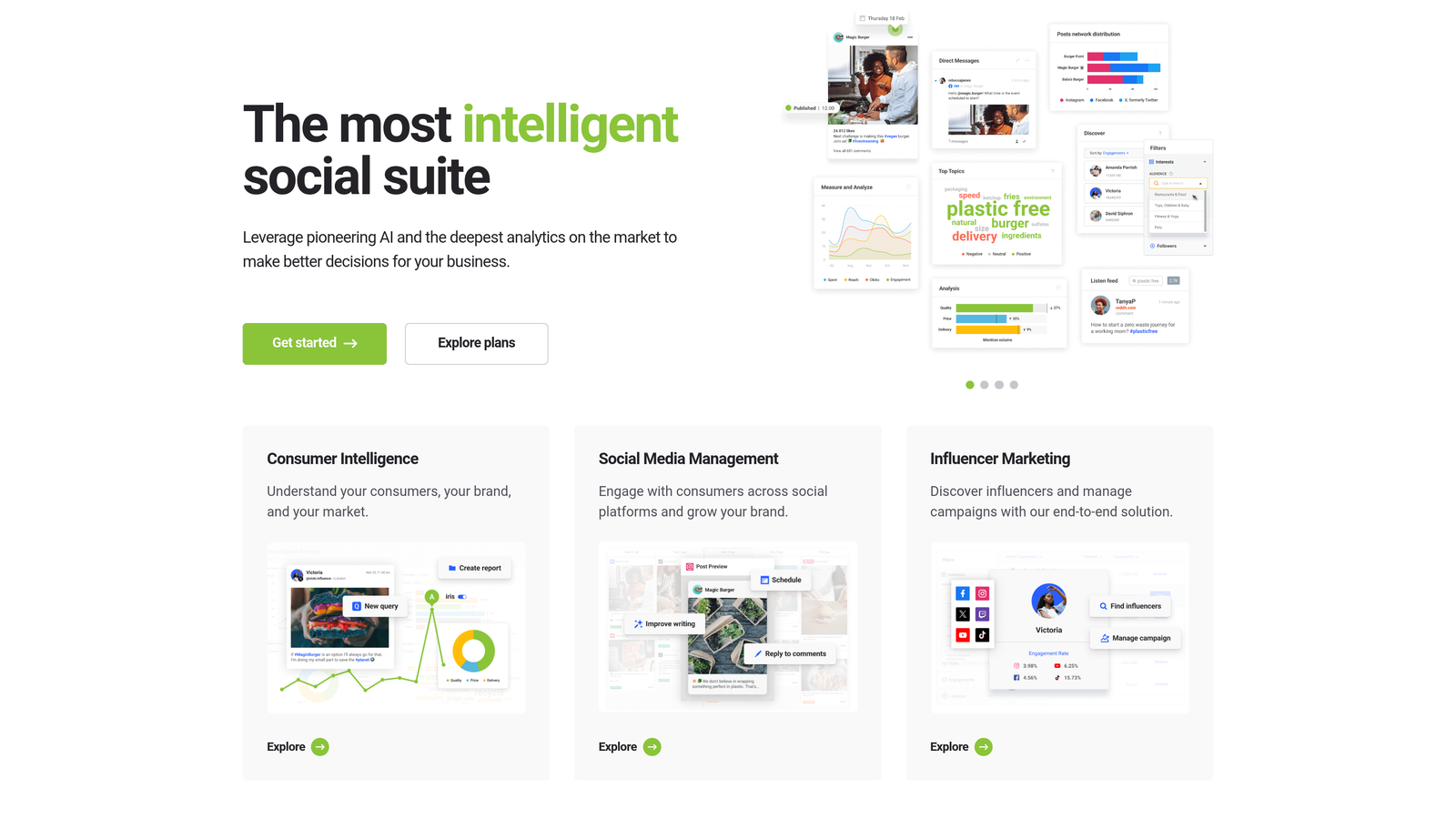
Brandwatch is a comprehensive social suite designed for businesses that need to understand and engage with customers at the speed of social media, combining consumer intelligence, social media management, and influencer marketing in one platform.
Where This Tool Shines
Brandwatch excels at processing massive conversation volumes while maintaining accuracy in sentiment classification. The platform's consumer intelligence capabilities go beyond surface-level sentiment scoring to reveal the emotional nuances and contextual factors driving customer perceptions.
What sets Brandwatch apart is its ability to shield brands from threats through proactive monitoring. The platform's crisis detection algorithms automatically flag unusual sentiment patterns and velocity changes, giving teams early warning before reputation issues escalate into full-blown crises.
Key Features & Capabilities
Consumer Intelligence: Deep audience analysis revealing demographic patterns, psychographic insights, and behavioral trends tied to sentiment shifts.
Multi-Channel Management: Unified dashboard for monitoring and responding across all social channels with sentiment context at your fingertips.
Data-Driven Collaboration: Team workflows built around sentiment insights, enabling coordinated responses and content strategy adjustments based on real-time emotional feedback.
Trend Reaction Capabilities: Identifies emerging sentiment trends before they become widespread, allowing proactive rather than reactive brand management.
Custom Reporting: White-label dashboards and executive summaries that translate complex sentiment data into strategic business intelligence.
Best For / Ideal Users
Large enterprises managing global campaigns across multiple markets will find Brandwatch's scale and sophistication invaluable. The platform is particularly well-suited for brands in crisis-prone industries like airlines, hospitality, and financial services where reputation threats can emerge rapidly.
Marketing agencies handling Fortune 500 clients benefit from the custom reporting and white-label capabilities. Teams requiring detailed competitive intelligence and demographic segmentation will appreciate the depth of analysis available.
Pricing
Enterprise pricing starts around $800 per month, with costs scaling based on data volume, number of users, and specific feature requirements. Custom packages available for large organizations with complex monitoring needs.
2. Hootsuite Insights
Best for: Social media teams seeking integrated sentiment tracking within their existing workflow management platform.
Hootsuite Insights combines sentiment analysis with social media management, allowing teams to monitor brand perception while executing campaigns from a single dashboard.
Where This Tool Shines
The seamless integration between sentiment monitoring and social media publishing sets Hootsuite apart from standalone analytics tools. When your team identifies negative sentiment in the monitoring stream, they can respond immediately without switching platforms or losing context. This unified workflow dramatically reduces response time during critical moments.
The platform excels at providing actionable insights that directly inform content strategy and community management decisions. Its inbox categorizes incoming messages by sentiment, enabling customer service teams to prioritize urgent negative feedback while celebrating positive mentions. This routing ensures high-impact conversations never slip through the cracks.
Key Features & Capabilities
Integrated Sentiment Analysis: Monitor brand perception across social channels while managing your publishing calendar and engagement workflows in one platform.
Real-Time Sentiment Alerts: Receive instant notifications when sentiment shifts dramatically, with direct response capabilities built into the alert system.
Trend Analysis Dashboard: Track sentiment changes over customizable timeframes to identify patterns and measure campaign impact on brand perception.
Competitor Sentiment Comparison: Benchmark your brand sentiment against competitors to understand your relative market position and identify opportunities.
Team Collaboration Tools: Coordinate sentiment-driven responses across team members with assignment features, approval workflows, and shared notes on sensitive conversations.
Best For / Ideal Users
Social media managers and digital marketing teams who need reliable sentiment insights without managing multiple disconnected tools. The platform works particularly well for companies that prioritize quick response times and integrated workflow efficiency over deep analytical capabilities.
Marketing agencies managing multiple client accounts benefit from the ability to monitor sentiment and execute responses within the same interface. Customer service teams appreciate the inbox's automatic prioritization of negative sentiment requiring immediate attention.
Pricing
Professional plans start at around $99 per month. Advanced listening, analytics and team collaboration sit in higher tiers, and Enterprise is quoted on request. Hootsuite revises its packaging often, so confirm which plan includes sentiment before you buy.
3. Sprout Social
Best for: Mid-market companies wanting comprehensive social listening with excellent customer support and user-friendly interfaces.
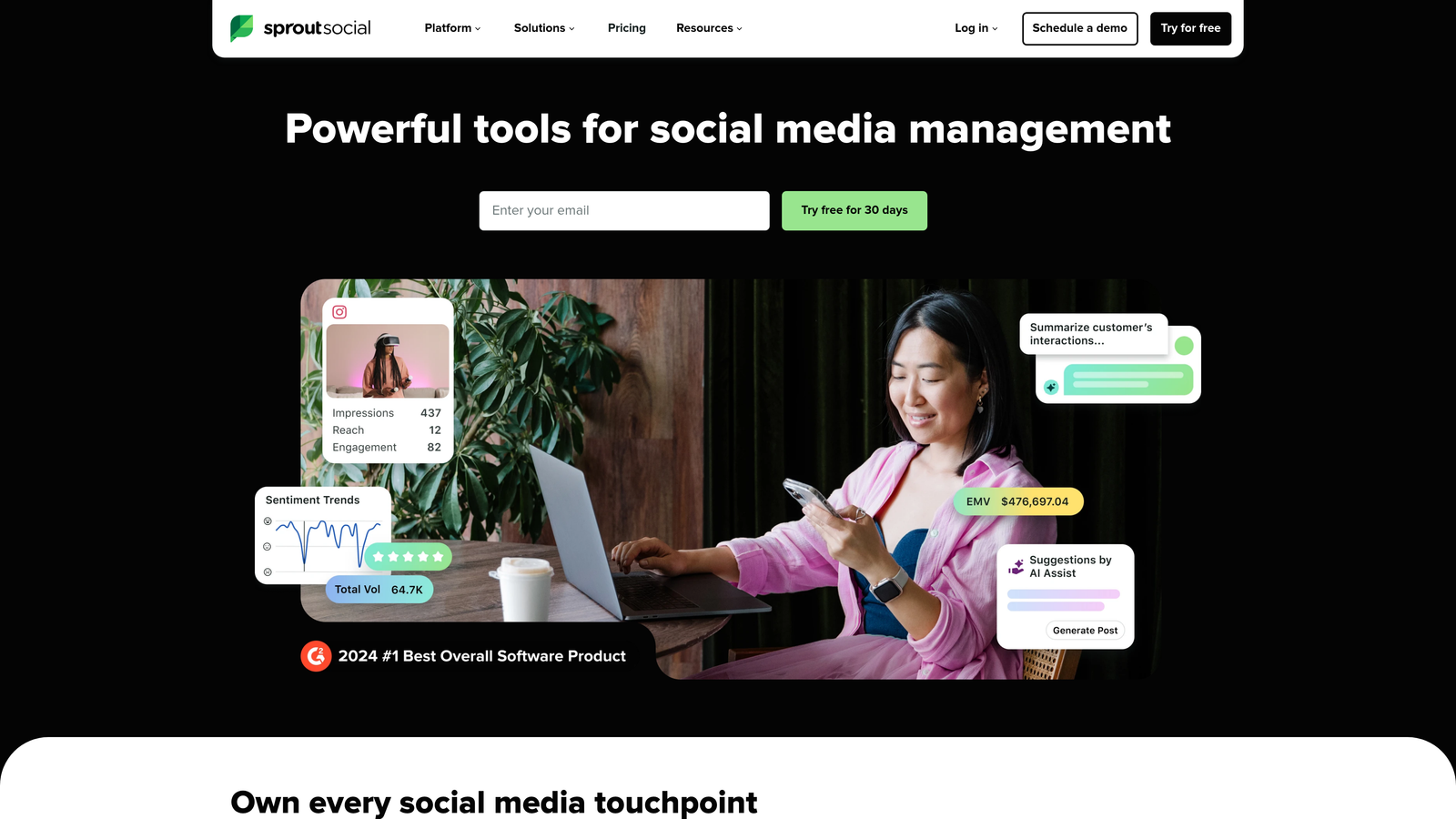
Sprout Social delivers intuitive sentiment analysis tools designed for marketing teams who need powerful insights without overwhelming complexity.
Where This Tool Shines
Sprout Social's sentiment analysis strikes an excellent balance between sophistication and usability. Their Smart Inbox automatically categorizes messages by sentiment, enabling customer service teams to prioritize responses effectively.
The platform's strength lies in its visual reporting capabilities, transforming complex sentiment data into clear, actionable insights that non-technical stakeholders can easily understand and act upon. Teams can quickly identify sentiment trends without spending hours interpreting raw data.
Key Features & Capabilities
Smart Inbox with Automatic Sentiment Categorization: Messages are instantly sorted by emotional tone, allowing teams to address urgent negative feedback first.
Visual Sentiment Trend Reporting: Customizable timeframes reveal how brand perception evolves across days, weeks, or months with intuitive charts and graphs.
Keyword and Hashtag Sentiment Tracking: Monitor specific terms across platforms to understand how different topics affect overall brand sentiment.
Competitive Sentiment Analysis: Benchmark your brand's emotional perception against competitors to identify positioning opportunities.
Team Performance Metrics: Track how effectively team members respond to different sentiment types and improve response quality over time.
CRM and Helpdesk Integration: Connect sentiment data with customer records to understand how interactions affect long-term relationships.
Automated Sentiment Alerts: Receive email and mobile notifications when sentiment shifts significantly, enabling rapid response to emerging issues.
Historical Sentiment Data: Access past sentiment patterns to identify seasonal trends and measure the impact of campaigns or product changes.
Best For / Ideal Users
Growing businesses and marketing agencies that need reliable sentiment insights without extensive technical setup. The platform works particularly well for teams managing multiple social accounts who value intuitive interfaces and responsive support.
Customer service teams benefit from the Smart Inbox prioritization, while marketing managers appreciate the visual reporting that simplifies stakeholder presentations. Companies that value ease of use and strong customer support over advanced analytical features will find Sprout Social straightforward to adopt.
Pricing
Plans are priced per seat per month. Full social listening, which provides sentiment across topics rather than only in your own inbox, is a paid add-on on top of the core plan. Expect several hundred dollars per month for a small team once listening is included.
4. Talkwalker
Best for: Data-driven organizations requiring advanced analytics, AI-powered insights, and comprehensive global coverage.
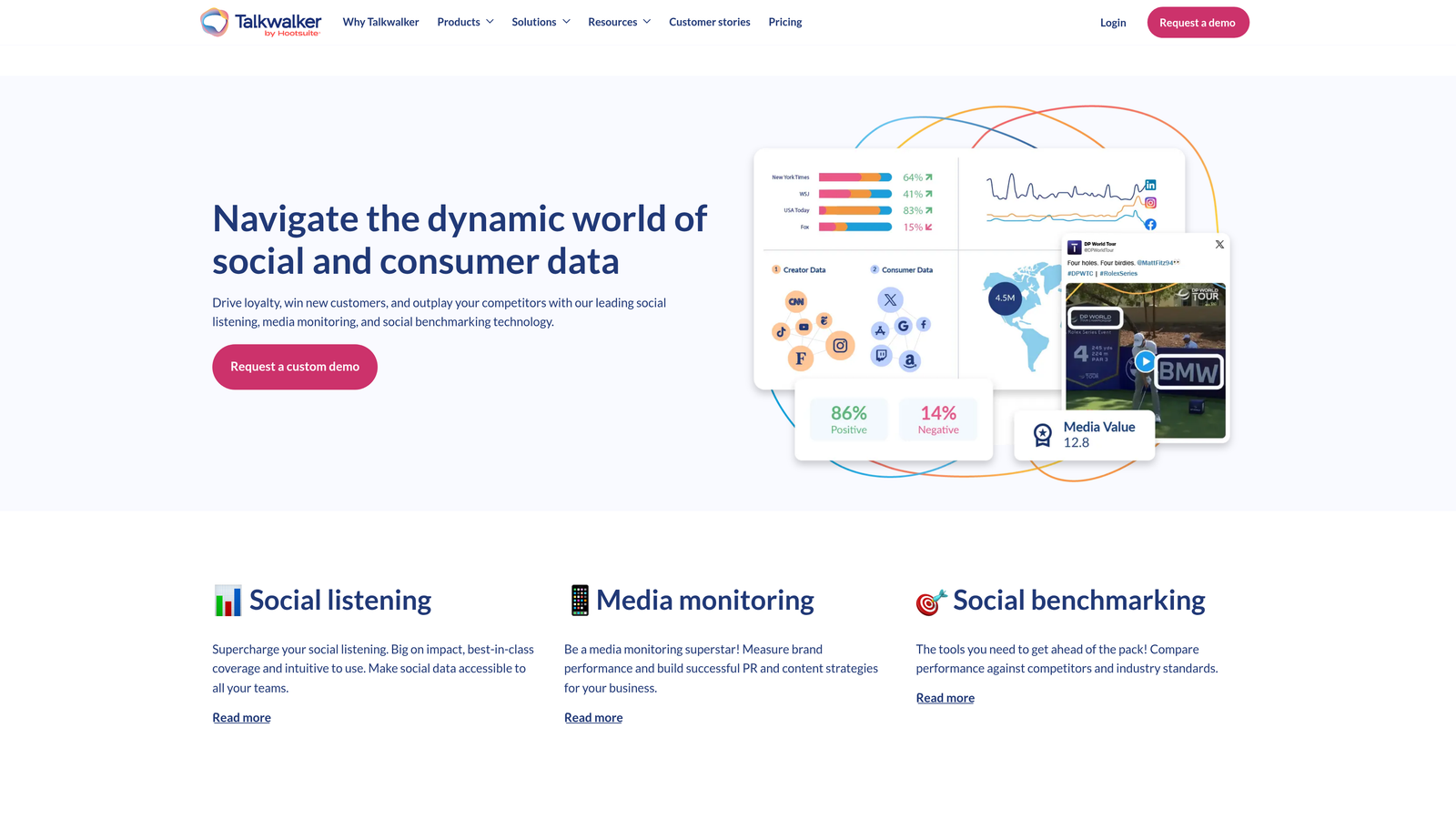
Talkwalker combines powerful sentiment analysis with advanced social listening capabilities, serving enterprise clients with sophisticated monitoring needs.
Where This Tool Shines
Talkwalker's Blue Silk™ AI technology processes massive conversation volumes with impressive accuracy across multiple languages and platforms. The platform excels at providing deep analytical insights that inform strategic business decisions, making it invaluable for brands operating in multiple markets or industries.
Its visual recognition capabilities set it apart. The platform can detect logos, products and brand presence in images and videos across social media, identifying sentiment even when your brand isn't explicitly mentioned in text. This multi-modal approach captures brand perception that text-only tools completely miss.
Key Features & Capabilities
Blue Silk™ AI and Generative AI: Advanced machine learning delivers context-aware sentiment analysis with Blue Silk™ GPT integration for natural language insights.
Comprehensive Data Coverage: Links creator and consumer data across social platforms, news sites, blogs, forums, and review sites for complete visibility.
Multi-Language Sentiment Detection: Analyzes sentiment across numerous languages with cultural context understanding to prevent misinterpretation.
Social Benchmarking: Compares your sentiment performance against competitors and industry standards with detailed competitive intelligence.
Audience Insights: Segments sentiment by demographics, psychographics, and behavioral patterns to understand which audiences drive different emotional responses.
Customer Feedback Analytics: Integrates review sites, survey data, and direct feedback with social sentiment for unified customer perception analysis.
Predictive Analytics: Identifies emerging sentiment trends before they become widespread, enabling proactive reputation management.
Media Monitoring: Tracks sentiment across traditional and digital media channels with comprehensive coverage and media value measurement.
Best For / Ideal Users
Large enterprises and global brands requiring sophisticated analytics capabilities across multiple markets. Marketing teams, PR professionals, and insights teams who need to understand not just what customers feel, but why those feelings exist and how they might evolve.
Particularly valuable for companies operating internationally where multi-language sentiment analysis and cultural context are critical. Social marketing professionals managing complex campaigns across diverse audiences will appreciate the platform's segmentation capabilities.
Consumer insights teams and agencies serving enterprise clients benefit from the depth of analysis and strategic intelligence that informs high-stakes business decisions.
Pricing
Enterprise pricing with custom packages based on data volume, feature requirements, and organizational needs. Contact their sales team for detailed pricing tailored to your monitoring scope.
5. NetBase Quid
Best for: Enterprise brands needing deep consumer insights, market intelligence, and predictive sentiment analytics.
NetBase Quid delivers sophisticated sentiment analysis combined with consumer intelligence, helping brands understand not just what customers feel, but why those feelings exist and what they mean for business outcomes.
Where This Tool Shines
NetBase Quid's intelligence engine processes billions of consumer signals and turns sentiment into actionable business recommendations. Its AI-powered platform goes beyond surface-level emotion detection to identify sentiment drivers: the specific product features, service aspects or brand attributes causing positive or negative feelings. This depth of analysis turns sentiment data from reactive alerts into strategic intelligence that informs product development, marketing strategy and business planning.
The platform excels at connecting sentiment patterns to business outcomes. Rather than simply reporting that sentiment dropped 15%, NetBase Quid reveals which product features drove the decline, which customer segments are most affected, and what actions will have the greatest impact on recovery. This strategic approach makes the platform invaluable for organizations where sentiment insights need to influence C-level decisions.
Key Features & Capabilities
Advanced NLP Technology: Context-aware sentiment analysis that understands nuance, sarcasm, and cultural variations across consumer conversations.
Sentiment Driver Identification: Root cause analysis reveals why sentiment exists, connecting feelings to specific business factors and customer experience elements.
Predictive Analytics: Forecasting capabilities link sentiment trends to potential business impacts, enabling proactive strategy adjustments.
Consumer Journey Mapping: Sentiment analysis at each customer touchpoint identifies critical moments affecting brand perception and purchase decisions.
Competitive Intelligence: Market positioning analysis compares your sentiment performance against competitors, revealing strategic opportunities and threats.
Custom Audience Segmentation: Demographic and psychographic filtering shows how different customer groups perceive your brand differently.
Best For / Ideal Users
Fortune 500 companies and large enterprises requiring strategic consumer intelligence beyond basic sentiment monitoring. Particularly valuable for market research teams, product managers, and strategic planning departments who need to understand the business implications of sentiment changes. Organizations in pharmaceuticals, consumer goods, and travel & hospitality sectors will find the industry-specific models especially relevant.
The platform suits cross-functional teams spanning communications, customer experience, data science, and consumer insights roles. Companies that view sentiment analysis as strategic intelligence rather than tactical monitoring will maximize the platform's capabilities.
Pricing
Enterprise solutions with custom pricing based on data volume, analytical requirements, and implementation scope. Investment typically reflects the platform's strategic positioning and comprehensive capabilities.
6. Awario
Best for: Growing businesses and agencies seeking powerful sentiment tracking with excellent value and user-friendly setup.
Awario provides comprehensive brand monitoring and sentiment analysis designed for teams that need enterprise-level features without enterprise complexity.
Where This Tool Shines
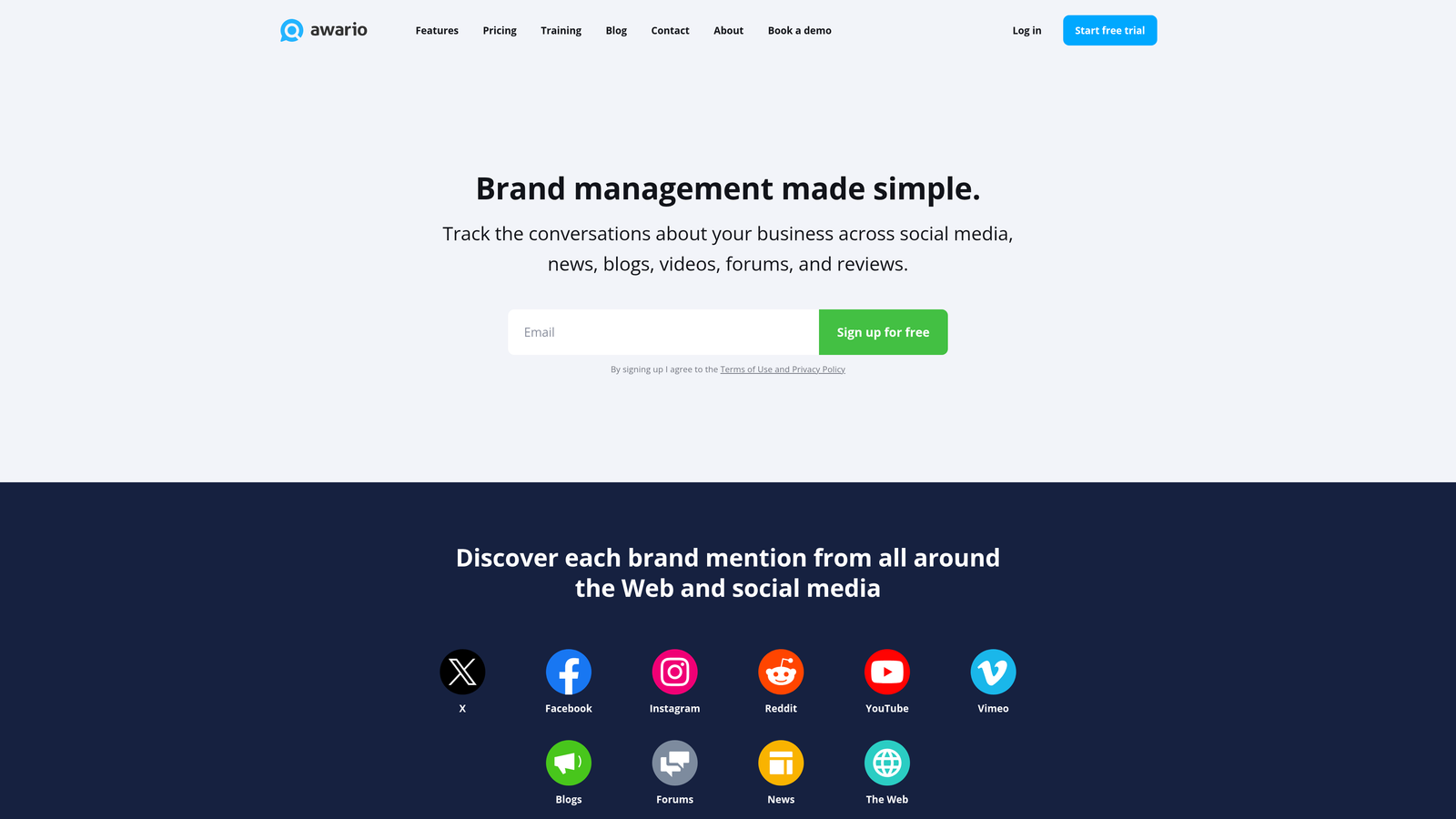
Awario excels at making advanced sentiment analysis accessible to smaller teams and growing businesses. The platform monitors social media, news sites, blogs, forums, and review sites while maintaining high accuracy in sentiment classification across all these sources.
What sets Awario apart is its ability to discover brand mentions across the open web, not just on major social platforms. The tool tracks conversations in niche communities and forums where your audience actually discusses products and services, capturing sentiment that competitors often miss. This broad coverage helps businesses understand their complete reputation landscape.
Key Features & Capabilities
Multi-Channel Monitoring: Tracks mentions across social media platforms, news websites, blogs, forums, and review sites in one unified dashboard.
Advanced Sentiment Analysis: Analyzes emotional tone and context to classify mentions as positive, negative, or neutral with high accuracy.
Influencer Discovery: Identifies niche influencers discussing your brand and enables direct outreach for partnership opportunities.
Lead Generation: Finds sales opportunities by monitoring conversations where people express needs your product solves.
Competitive Intelligence: Tracks competitor mentions and sentiment to identify market positioning opportunities and competitive advantages.
Location-Based Tracking: Monitors sentiment by geographic region to understand local market perception and regional variations.
Team Collaboration: Provides role-based access and workflow tools for coordinating responses across marketing and customer service teams.
Automated Reporting: Generates customizable sentiment reports and delivers alerts when significant sentiment changes occur.
Best For / Ideal Users
Marketing agencies managing multiple client accounts who need efficient monitoring without per-client complexity. The platform's intuitive interface enables quick client onboarding and straightforward reporting.
Growing e-commerce brands seeking to understand customer sentiment across review sites, social media, and forums. The lead generation features help identify purchase-ready prospects through social listening.
Small to medium businesses with limited analytics resources who need powerful sentiment insights without requiring dedicated data science teams or extensive training.
Pricing
Plans start at $29 per month for basic monitoring, with advanced sentiment features and higher mention limits available from $89 monthly. A free trial lets you test the platform before committing.
7. Critical Mention
Best for: Organizations monitoring traditional media sentiment alongside digital channels, particularly in PR and communications.
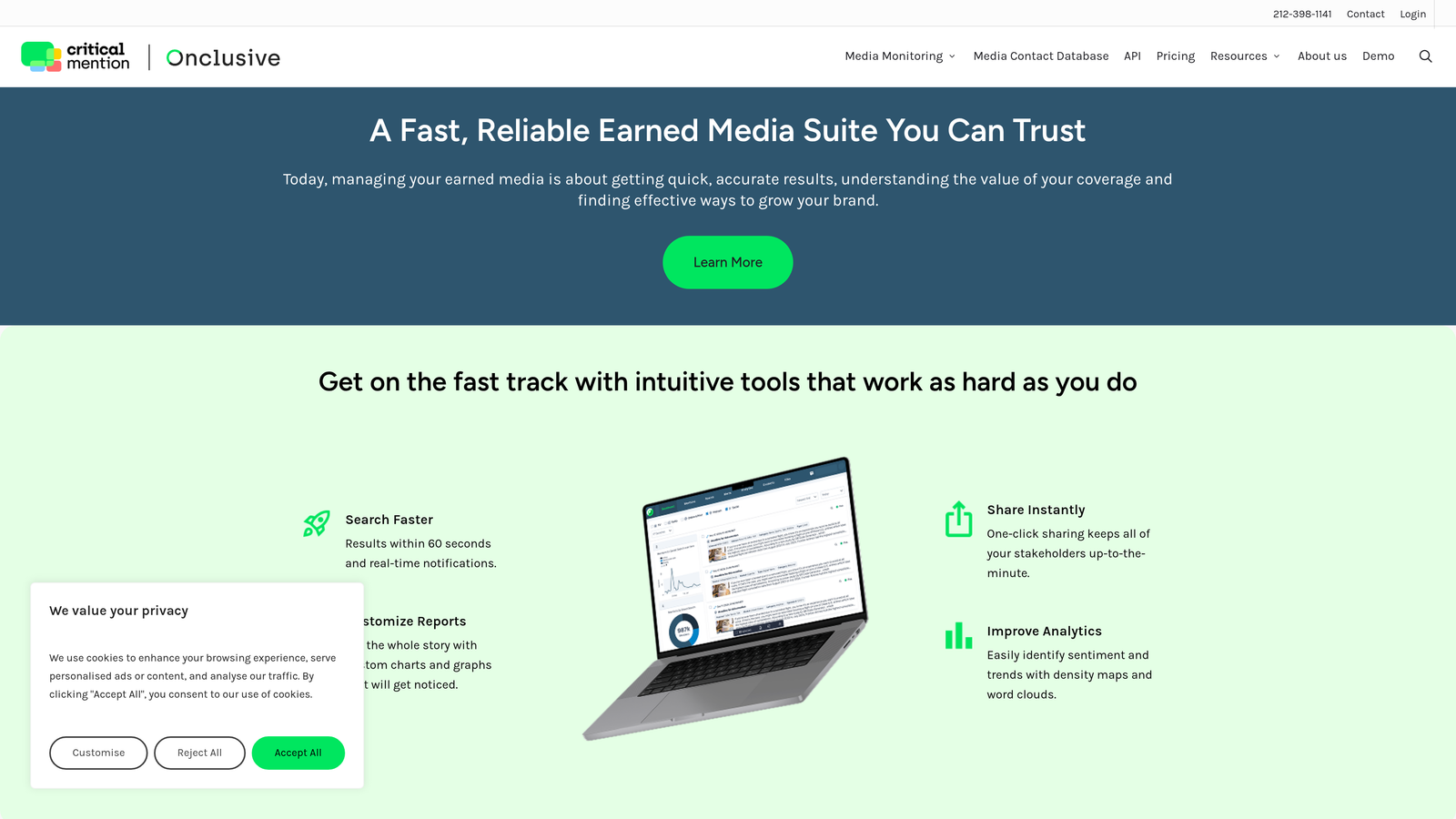
Critical Mention delivers comprehensive earned media monitoring that bridges the gap between traditional broadcast coverage and digital sentiment analysis.
Where This Tool Shines
Critical Mention's unique strength lies in its comprehensive coverage of traditional media channels that most sentiment tracking tools completely miss. While competitors focus exclusively on social media and web sources, this platform monitors TV broadcasts, radio programs, podcasts, and print media alongside digital channels.
This all-channel approach proves invaluable for brands managing public relations campaigns or crisis communications. When a story breaks on morning television or gets discussed on popular radio shows, Critical Mention captures that sentiment immediately. The platform's broadcast monitoring capabilities include real-time alerts when your brand appears on TV or radio, complete with sentiment classification and media value measurement.
Key Features & Capabilities
Broadcast Media Monitoring: Real-time TV and radio tracking with sentiment analysis across national and local stations.
Podcast & Audio Analysis: Comprehensive podcast monitoring with sentiment detection in audio content and transcription capabilities.
Print Media Coverage: Traditional newspaper and magazine sentiment tracking with digital archive access.
Social Media Integration: Complete social platform monitoring that connects traditional and digital sentiment patterns.
Media Contact Database: Media contact information for proactive outreach and relationship management.
Crisis Communication Tools: Coordinated response systems that track sentiment across all media types during critical situations.
Media Value Measurement: ROI analysis showing the equivalent advertising value of earned media coverage with sentiment weighting.
Best For / Ideal Users
PR agencies managing comprehensive media relations campaigns across traditional and digital channels. Communications teams at public companies who need to monitor sentiment in broadcast interviews and news coverage. Political campaigns and public figures tracking reputation across all media types.
Organizations in industries where traditional media still drives significant public perception, such as healthcare, finance, government and enterprise B2B. Brands launching major announcements or managing crisis situations that span multiple media channels simultaneously.
Pricing
Custom pricing based on monitoring scope and media types. Enterprise packages typically start around $500 monthly for comprehensive multi-channel coverage, with costs scaling based on geographic reach and feature requirements.
Brand Sentiment Tools Compared
| Tool | Strongest channels | Starting price | Best fit |
|---|---|---|---|
| Brandwatch | Social, web, forums | ~$800/mo | Global enterprises, crisis-prone industries |
| Hootsuite Insights | Owned social channels | ~$99/mo | Social teams that publish and respond in one tool |
| Sprout Social | Social inbox, listening add-on | Per seat, plus listening add-on | Mid-market teams that want clear reporting |
| Talkwalker | Social, news, images and video | Custom | Multi-language, multi-market brands |
| NetBase Quid | Social, consumer and market data | Custom | Insights teams that need sentiment drivers |
| Awario | Web, forums, social, reviews | $29/mo | SMBs and agencies on a budget |
| Critical Mention | TV, radio, podcasts, print | ~$500/mo | PR and communications teams |
Prices are indicative starting points. Vendors change packaging frequently, so confirm current tiers directly with each vendor.
How to Evaluate a Brand Sentiment Analysis Tool
- Test accuracy on your own data. Export 200 recent mentions and have a person label them. Then compare the tool's labels against yours. Generic models often misread industry jargon, such as "sick" in gaming or "killer" in SaaS, and sarcasm. Aspect-level sentiment, which scores price, support and quality separately, is more useful than one label per post.
- Map coverage to where your customers talk. B2B buyers use G2, Reddit and LinkedIn. Consumer brands need TikTok, Instagram and app-store reviews. Note that X and Reddit access depends on each vendor's API agreements.
- Check alert latency and thresholds. For crisis detection, look for volume-spike and sentiment-velocity alerts, not daily digests.
- Confirm language support. Native models for each market outperform translate-then-score approaches.
- Look for integrations. Routing negative mentions into your helpdesk or CRM is what turns monitoring into action.
How a Brand Sentiment Score Is Calculated
Most tools report a net sentiment score: (positive mentions − negative mentions) ÷ (positive + negative mentions) × 100. The result ranges from −100 to +100. Neutral mentions are usually excluded. For example, 600 positive and 200 negative mentions give a score of +50. Some vendors weight mentions by reach or engagement, so scores are not comparable across tools. Pick one methodology, track the trend, and benchmark against competitors measured the same way. Share of voice and sentiment should be read together. A small brand with +70 sentiment across 50 mentions is in a weaker position than a competitor with +40 across 5,000.
Tracking Brand Sentiment in AI Engines
None of the seven tools above measure how large language models describe you. That gap matters more each quarter as buyers ask ChatGPT, Claude, Perplexity and Google AI Overviews for recommendations. In AI visibility tracking, sentiment analysis means scoring the tone of AI-generated answers that mention your brand. It tracks whether you are recommended, listed neutrally or framed with caveats such as "expensive" or "limited support". It also identifies which sources the model appears to draw on.
The workflow differs from social listening. You define a set of buyer-intent prompts, such as "best CRM for startups", and run them on a schedule across AI models. You then score each response for mention, position and sentiment. Platforms such as Sight AI's AI brand sentiment tracking automate this across engines. For a wider comparison of tools that monitor brand presence in LLM answers, see our roundup of the best AI visibility software tools.
Putting It All Together
The right brand sentiment tracking software transforms how you understand and protect your reputation. Enterprise teams managing global campaigns will find the sophisticated analytics and customization of Brandwatch or NetBase Quid invaluable for strategic decision-making. Mid-market companies often discover the sweet spot with Sprout Social or Hootsuite Insights, which deliver powerful sentiment analysis without overwhelming complexity.
Growing businesses and agencies should explore Awario, which provides broad web monitoring at an accessible price while staying simple to use day to day. If your brand has significant traditional media presence, Critical Mention's broadcast monitoring fills a gap that purely digital tools miss.
Your monitoring priorities should guide your decision. Social media-focused teams benefit from integrated platforms like Hootsuite or Sprout Social. Brands needing comprehensive web coverage across forums and review sites will appreciate Awario's broad reach. Organizations requiring predictive analytics and deep consumer insights should evaluate Talkwalker or NetBase Quid.
Remember that successful sentiment tracking extends beyond the software itself. The most effective implementations combine accurate technology with clear processes for acting on insights. Choose a platform that integrates seamlessly with your existing workflows and enables your team to transform sentiment data into protective action.
Frequently asked questions
What is brand sentiment analysis?
Brand sentiment analysis is the automated classification of what people say about your brand as positive, negative or neutral, using natural language processing. Better tools go further. They score individual aspects such as price, support or product quality, detect sarcasm, and track how sentiment changes over time and against competitors. The output is usually a net sentiment score plus alerts when the balance shifts sharply, which helps teams respond before a negative trend spreads.
What is the best software for tracking brand sentiment trends?
It depends on scale and channels. Brandwatch and Talkwalker lead for enterprise trend analysis across social and news. Sprout Social and Hootsuite suit social-first teams, and Awario is the best value from $29 per month. Critical Mention covers TV, radio and podcasts. Choose based on where your customers actually talk, and test the tool's accuracy on your own data before committing. The comparison table above summarizes the trade-offs.
Is there a platform that shows how AI engines perceive my brand sentiment?
Yes, although traditional social listening tools do not offer it. AI visibility platforms run buyer-intent prompts across ChatGPT, Claude, Perplexity and Google AI Overviews. They then record whether your brand is mentioned and score the tone of each answer. Sight AI's AI brand sentiment feature does this on a schedule. It shows trends by engine and prompt, so you can see which narratives or sources are shaping negative framing.
Which platforms provide real-time AI sentiment analysis for brand health monitoring?
For social and web conversations, Brandwatch, Talkwalker and Hootsuite offer near-real-time alerts triggered by sentiment or volume spikes. For AI-generated answers, monitoring is scheduled rather than truly real-time, because the platform has to query the models repeatedly. Daily or weekly prompt runs are typical, and they are sufficient because AI answers change more slowly than social feeds. Many brands combine both types of tool to get a complete picture of brand health.
How is a brand sentiment score calculated?
Most tools calculate a net score: positive minus negative mentions, divided by total positive and negative mentions, multiplied by 100. This gives a range from −100 to +100. Methodologies vary, since some weight mentions by reach, so compare trends within a single tool rather than across vendors. See the brand sentiment score section above for a worked example and guidance on reading sentiment alongside share of voice.
While you're tracking brand sentiment across traditional channels, don't overlook the growing importance of AI-powered search platforms. Start tracking your AI visibility today to ensure your brand maintains positive sentiment across both human and AI-driven discovery channels.