Enterprise AI content platforms promise to transform how marketing teams scale production, but pricing at the enterprise tier is notoriously opaque. Most platforms hide their real costs behind "Contact Sales" buttons, making it nearly impossible for marketing leaders and procurement teams to compare options or build accurate budget forecasts.
This guide cuts through that friction. Below, you'll find a breakdown of leading enterprise AI content platforms, what each actually costs, what you get at enterprise pricing tiers, and where hidden fees tend to lurk. Whether you're a marketing team scaling organic traffic, a founder evaluating content automation, or an agency managing multiple client accounts, this list gives you the information you need without the sales-call runaround.
1. Sight AI
Best for: Teams that need AI content generation and AI brand visibility tracking in a single platform.
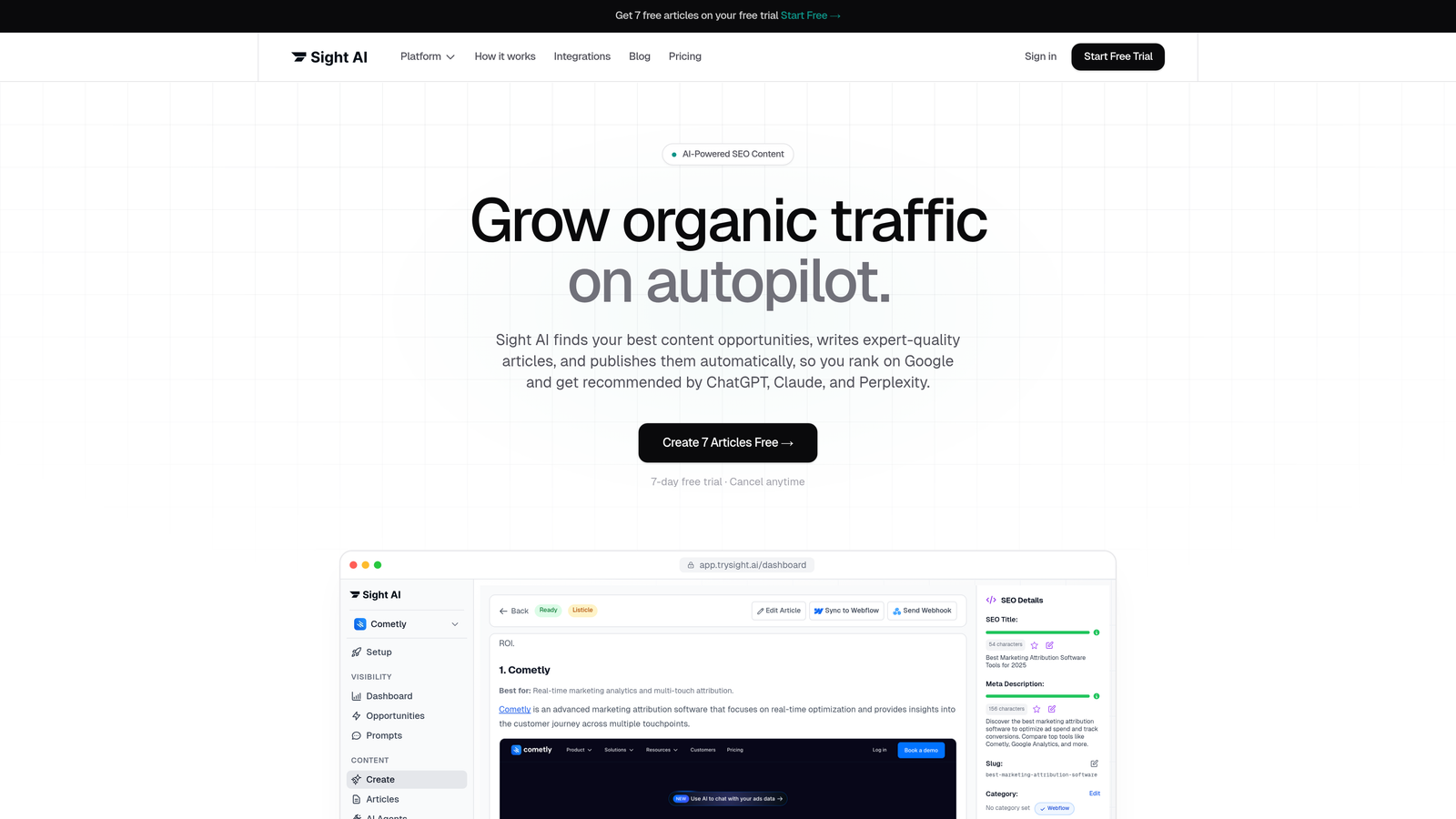
Sight AI is an all-in-one platform combining AI-powered content generation with brand mention tracking across major AI models, plus automated website indexing.
Where This Tool Shines
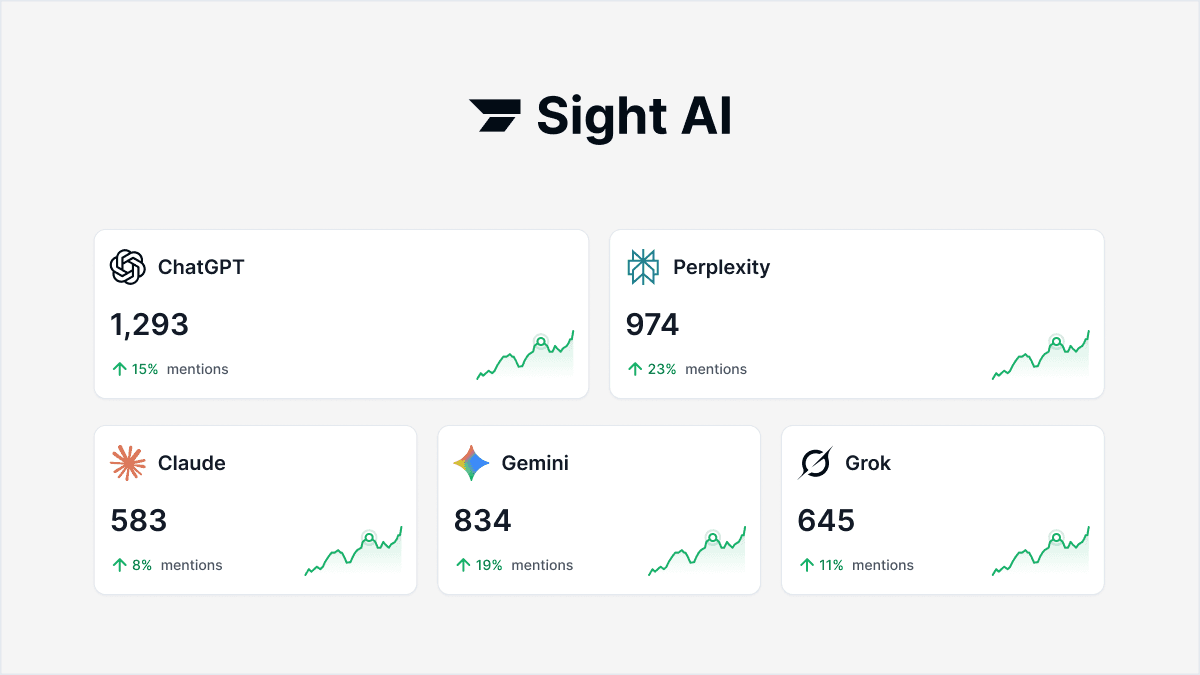
Most content platforms focus exclusively on creating content for traditional search. Sight AI addresses a gap that has become increasingly important in 2026: understanding how AI models like ChatGPT, Claude, and Perplexity talk about your brand, and creating content that improves that visibility. It bundles AI visibility tracking, content generation, and indexing into a single workflow rather than requiring three separate tools.
The Autopilot Mode is particularly valuable for lean marketing teams. Instead of managing individual content requests, you can set up ongoing content production that runs with minimal oversight, freeing up time for strategy rather than execution.
Key Features
AI Visibility Score: Tracks how your brand appears across 6+ AI models with sentiment analysis and prompt tracking, so you can see exactly where you're mentioned and how.
13+ Specialized AI Writing Agents: Purpose-built agents for different content formats including listicles, guides, and explainers, each optimized for both SEO and GEO (generative engine optimization).
Autopilot Mode: Hands-off content production at scale, allowing teams to maintain publishing velocity without manual intervention on every piece.
IndexNow Integration: Automated sitemap updates and IndexNow integration push new content to search engines faster, reducing the lag between publishing and indexing.
CMS Auto-Publishing: Direct publishing capabilities that streamline the workflow from content generation to live page without extra manual steps.
Best For
Marketers and founders who want to grow organic traffic while also monitoring and improving how AI models represent their brand. Particularly well-suited for teams that currently pay separately for content tools, SEO tools, and AI monitoring, and want to consolidate into one platform.
Pricing
Custom pricing available. Sight AI positions itself as cost-efficient by bundling AI visibility tracking, content generation, and indexing into one platform, reducing the total cost compared to running multiple point solutions.
2. Jasper
Best for: Marketing teams needing brand voice consistency across high-volume campaign content.
Jasper is an enterprise AI content platform built specifically for marketing teams, with strong brand governance and campaign workflow features.
Where This Tool Shines
Jasper's brand voice training is one of its most mature capabilities. You can feed the platform your existing content, style guides, and brand documentation, and it applies that context consistently across outputs. For enterprise marketing teams managing multiple writers or campaigns simultaneously, this consistency layer is genuinely valuable.
The marketing-specific templates and campaign workflows also reduce the time from brief to draft. Rather than starting from a blank page, teams work from structured workflows designed around real marketing use cases.
Key Features
Brand Voice Training: Ingests your existing content and brand documentation to produce consistently on-brand outputs across all content types.
Campaign Workflows: Marketing-specific templates and multi-step workflows for campaigns, social content, and long-form assets.
Team Collaboration: Role-based permissions and shared workspaces for larger marketing teams with multiple contributors.
Martech Integrations: Connects with Google Docs, Webflow, and other common marketing tools to fit into existing workflows.
AI Image Generation: Built-in image generation capabilities alongside text, reducing the need for separate creative tools.
Best For
Mid-to-large marketing teams with established brand guidelines who need to scale content production without sacrificing voice consistency. Less suited for teams with heavy SEO optimization needs, where dedicated optimization tools may be necessary.
Pricing
The Business plan starts at approximately $499/month, custom-quoted based on seats and usage. Enterprise tier requires a sales consultation, with pricing scaling significantly by team size and content volume.
3. Writer
Best for: Enterprises with strict compliance, governance, and brand consistency requirements.
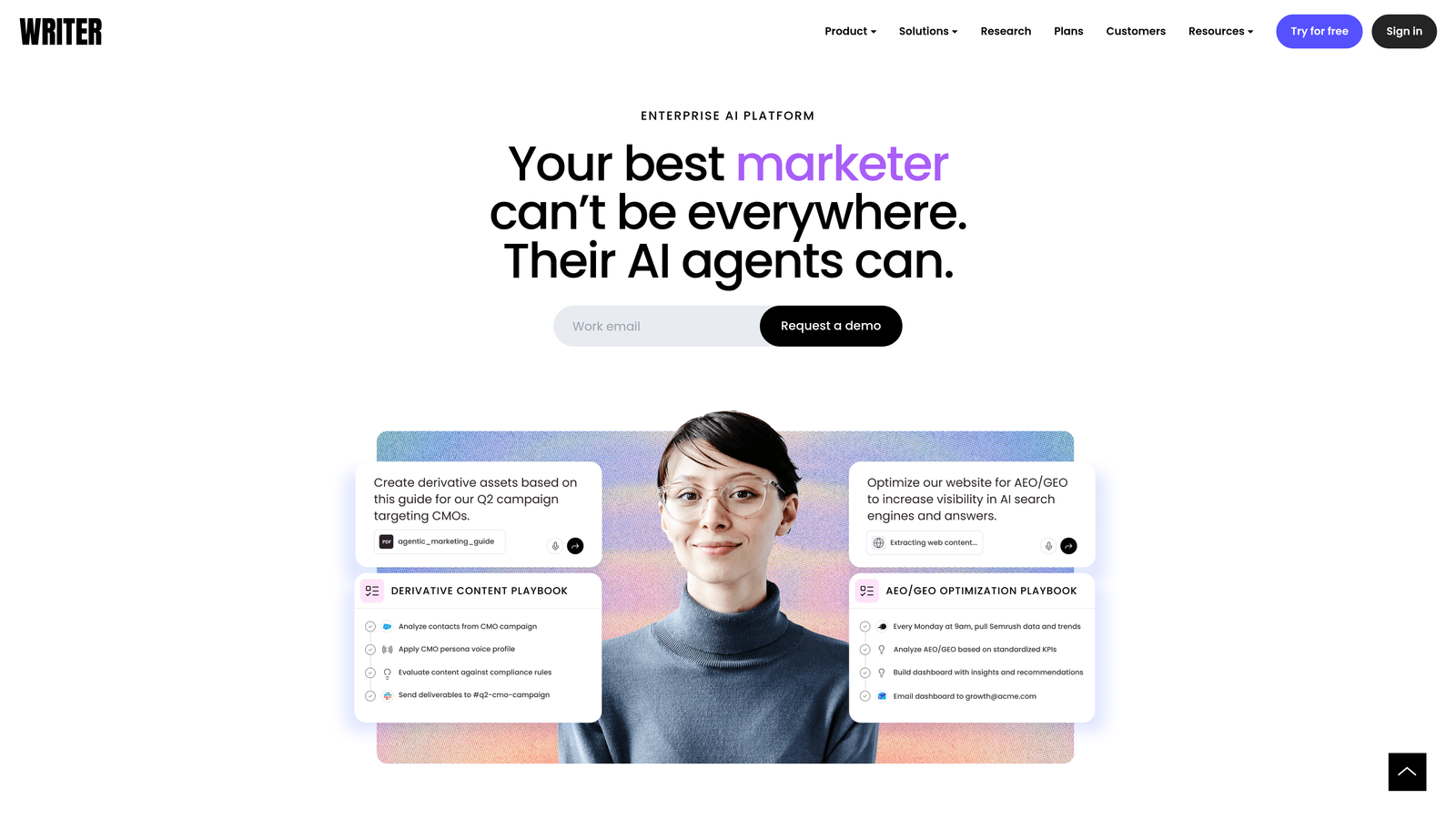
Writer is an enterprise AI platform built around content governance, brand consistency, and compliance controls for regulated industries and large organizations.
Where This Tool Shines
Writer differentiates itself with its governance-first approach. Where most AI content tools prioritize output speed, Writer prioritizes output control. Its AI guardrails, terminology management, and style guide enforcement make it a strong fit for industries where getting the language wrong carries real risk, such as financial services, healthcare, and legal.
The no-code custom AI app builder is a notable enterprise feature. Teams can build internal tools on top of Writer's AI without needing engineering resources, which extends the platform's value beyond content creation into broader operational workflows.
Key Features
AI Guardrails: Content governance framework that enforces brand standards, approved terminology, and compliance requirements at the generation level.
Terminology Management: Style guide enforcement ensures consistent use of approved language and prevents off-brand or non-compliant phrasing.
Enterprise Security: SOC 2 certified and HIPAA-eligible, meeting the compliance requirements of regulated industries.
Custom AI App Builder: No-code tools for building internal AI applications on top of Writer's platform without developer resources.
Knowledge Graph Integration: Connects to internal knowledge sources to ground AI outputs in company-specific information.
Best For
Large enterprises in regulated industries where compliance, brand consistency, and data security are non-negotiable. The governance features justify the premium for organizations where content errors carry legal or reputational risk.
Pricing
Team plan starts at $18/user/month. Enterprise pricing is custom-quoted and typically requires an annual commitment, with pricing based on user count and usage volume.
4. Surfer SEO
Best for: Content teams focused on ranking in traditional organic search with data-driven optimization.
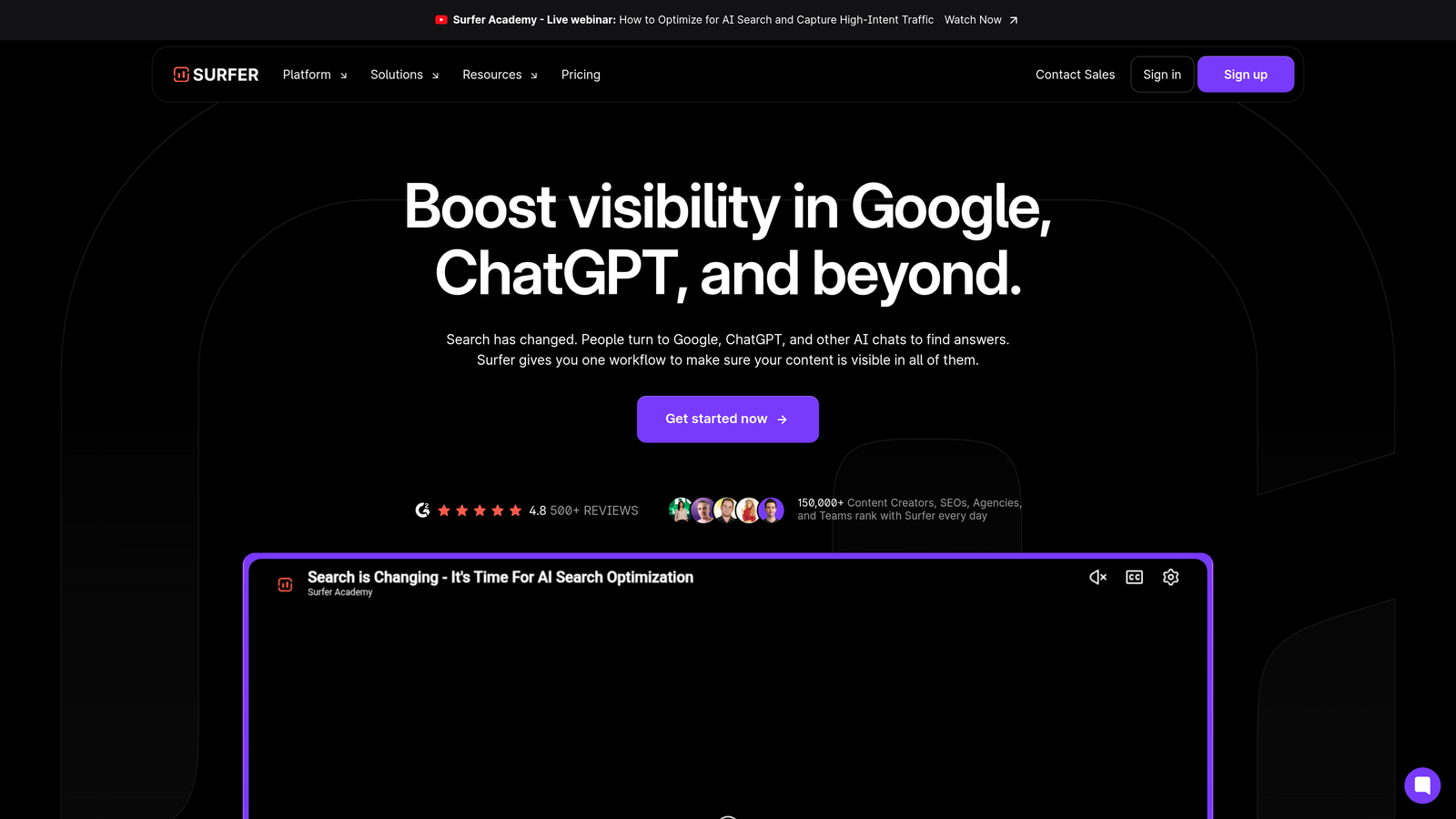
Surfer SEO is an SEO-focused content platform that combines AI writing with real-time SERP analysis and on-page optimization scoring.
Where This Tool Shines
Surfer's core strength is its tight integration between SERP analysis and content creation. Rather than writing first and optimizing later, the Content Editor shows you real-time optimization scores as you write, based on what's actually ranking for your target keyword. This reduces the back-and-forth between writing and optimization that slows many content workflows.
The Audit tool adds ongoing value by identifying optimization opportunities in existing content, not just new pieces. For teams with large content libraries, this can surface quick wins without requiring new content production.
Key Features
Real-Time Content Editor: SEO scoring based on live SERP analysis updates as you write, keeping optimization built into the drafting process.
Surfer AI: Integrated AI writing tool that generates drafts already optimized for your target keyword based on SERP data.
Keyword Research Tools: Content planning features that help identify target keywords and map out content clusters.
Content Audit: Identifies optimization opportunities in existing published content to improve rankings without new articles.
Multi-Language Support: Optimization capabilities across multiple languages for global content teams.
Best For
Content teams whose primary goal is traditional organic search ranking. Strong for agencies and in-house SEO teams managing high content volumes. Less suited for teams focused on AI search visibility or brand mention tracking.
Pricing
Scale AI plan at $219/month billed annually. Enterprise and custom plans are available for larger organizations with higher volume requirements, quoted on request.
5. Frase
Best for: Editorial teams that prioritize research-backed content briefs before writing begins.
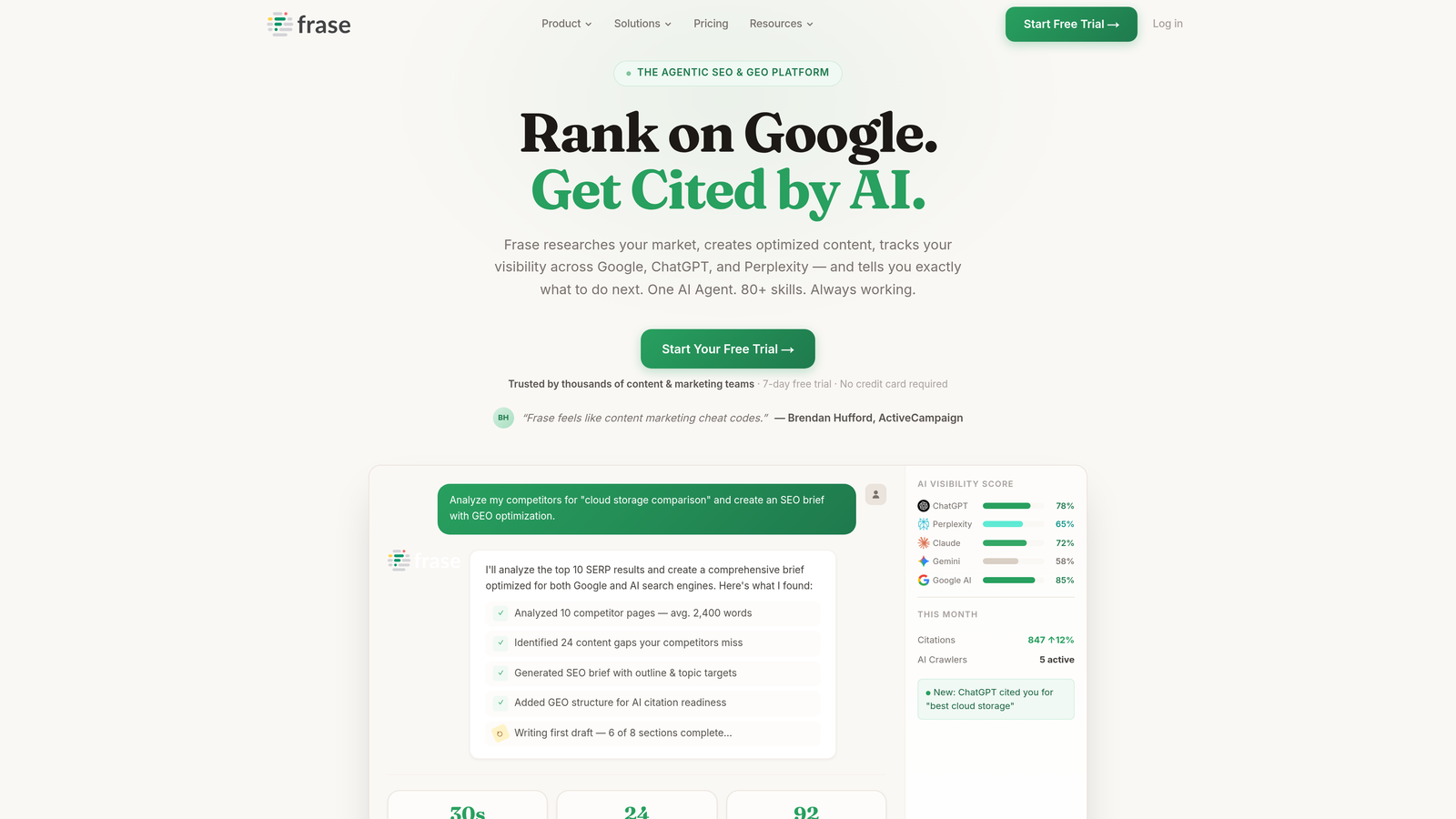
Frase is a research-first AI content platform that generates detailed content briefs from SERP analysis before producing AI-written drafts.
Where This Tool Shines
Frase's workflow is built around the brief, not the draft. Before any AI writing begins, the platform pulls SERP data to build a comprehensive research document covering what competitors cover, what questions the content should answer, and what topics need to be included. This makes it especially valuable for teams with editorial standards that require well-researched content rather than fast, generic output.
The Answer Engine feature adds an interesting internal use case: teams can use it as an AI-powered knowledge base that pulls from their own content library, reducing time spent searching for internal information.
Key Features
Automated SERP Research: Pulls competitor content and SERP data to build comprehensive briefs before writing begins.
AI Writing with Optimization: Draft generation paired with optimization recommendations based on the research phase.
Topic Scoring: Content gap identification that highlights what your content is missing compared to top-ranking pages.
Answer Engine: Internal knowledge base tool that makes your existing content searchable and queryable.
Team Collaboration: Workflow management and collaboration features for editorial teams working on multiple pieces simultaneously.
Best For
Editorial teams and content managers who want structured, research-backed content workflows. Works well for teams producing in-depth guides and long-form content where topic coverage depth matters for ranking.
Pricing
Team plan at approximately $114.99/month. Enterprise pricing is custom-quoted based on volume and feature requirements.
6. Clearscope
Best for: Enterprise editorial teams focused on content quality grading and semantic optimization.
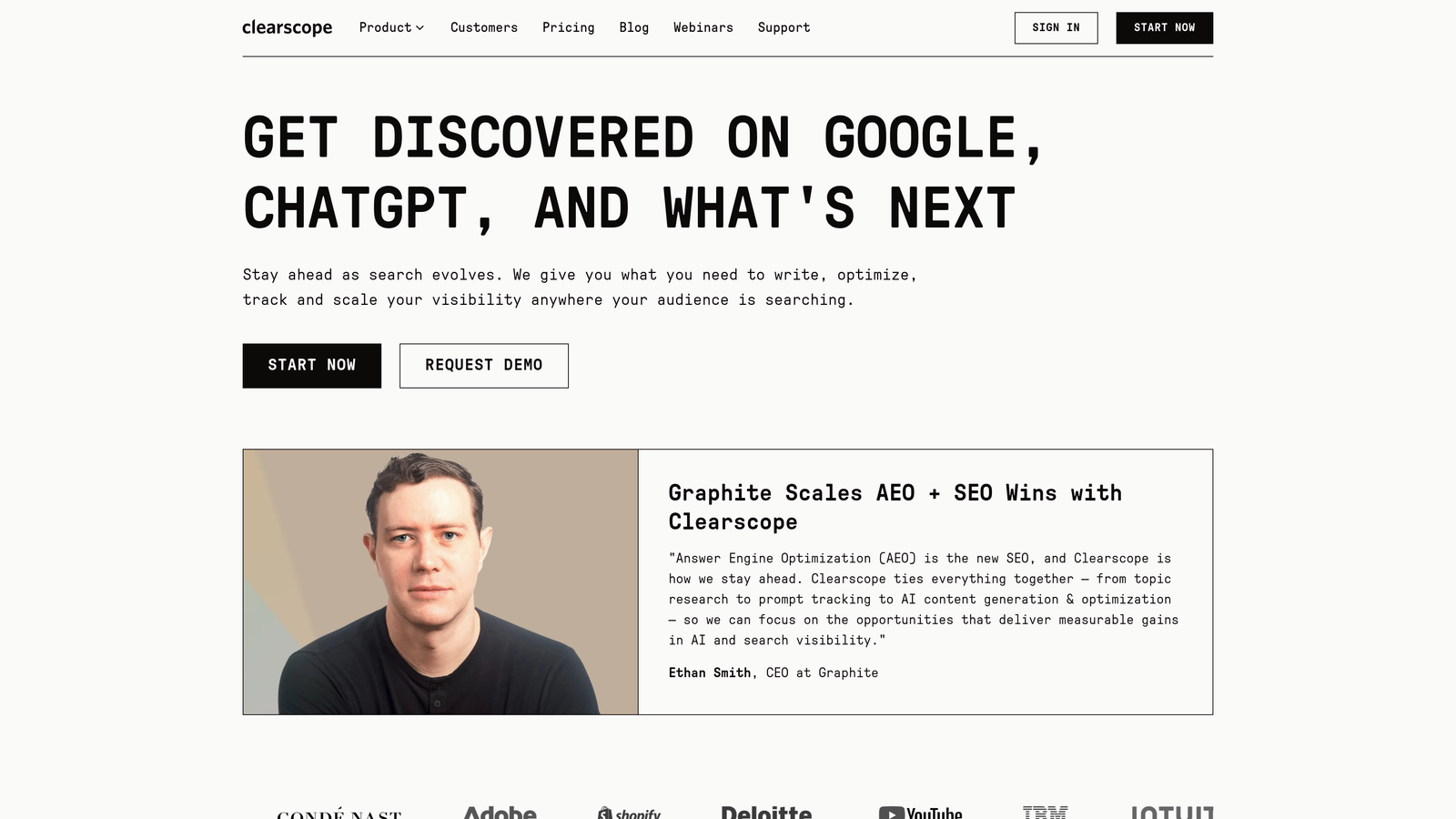
Clearscope is a premium content optimization platform known for its content grading system and NLP-powered keyword recommendations.
Where This Tool Shines
Clearscope's grading system is its most distinctive feature. Content receives a letter grade based on how well it covers the semantic landscape of a topic, giving writers and editors a clear, objective benchmark to hit before publishing. This makes quality control more systematic, especially in larger editorial teams where consistency can be difficult to enforce manually.
The platform integrates directly with Google Docs and WordPress, which keeps it embedded in the tools writers already use rather than requiring a separate workflow. This reduces adoption friction significantly.
Key Features
Content Grading System: A++ scoring system provides an objective quality benchmark based on semantic topic coverage.
NLP Keyword Recommendations: Semantic keyword suggestions powered by natural language processing, not just keyword frequency.
Native Integrations: Direct connections to Google Docs and WordPress keep optimization inside familiar writing environments.
Readability Analysis: Content structure and readability assessments alongside SEO recommendations.
Shared Report Access: Team collaboration features that allow multiple stakeholders to access and review optimization reports.
Best For
Enterprise editorial teams with existing writers who need a quality and optimization layer rather than AI draft generation. Best for organizations where content quality and consistency are the primary challenge, not content volume.
Pricing
Essentials plan at $189/month for 3 users. Business and Enterprise tiers are custom-quoted, with expanded user seats and higher report volumes included at each tier.
7. MarketMuse
Best for: Enterprise content strategists building topic authority through data-driven content planning.
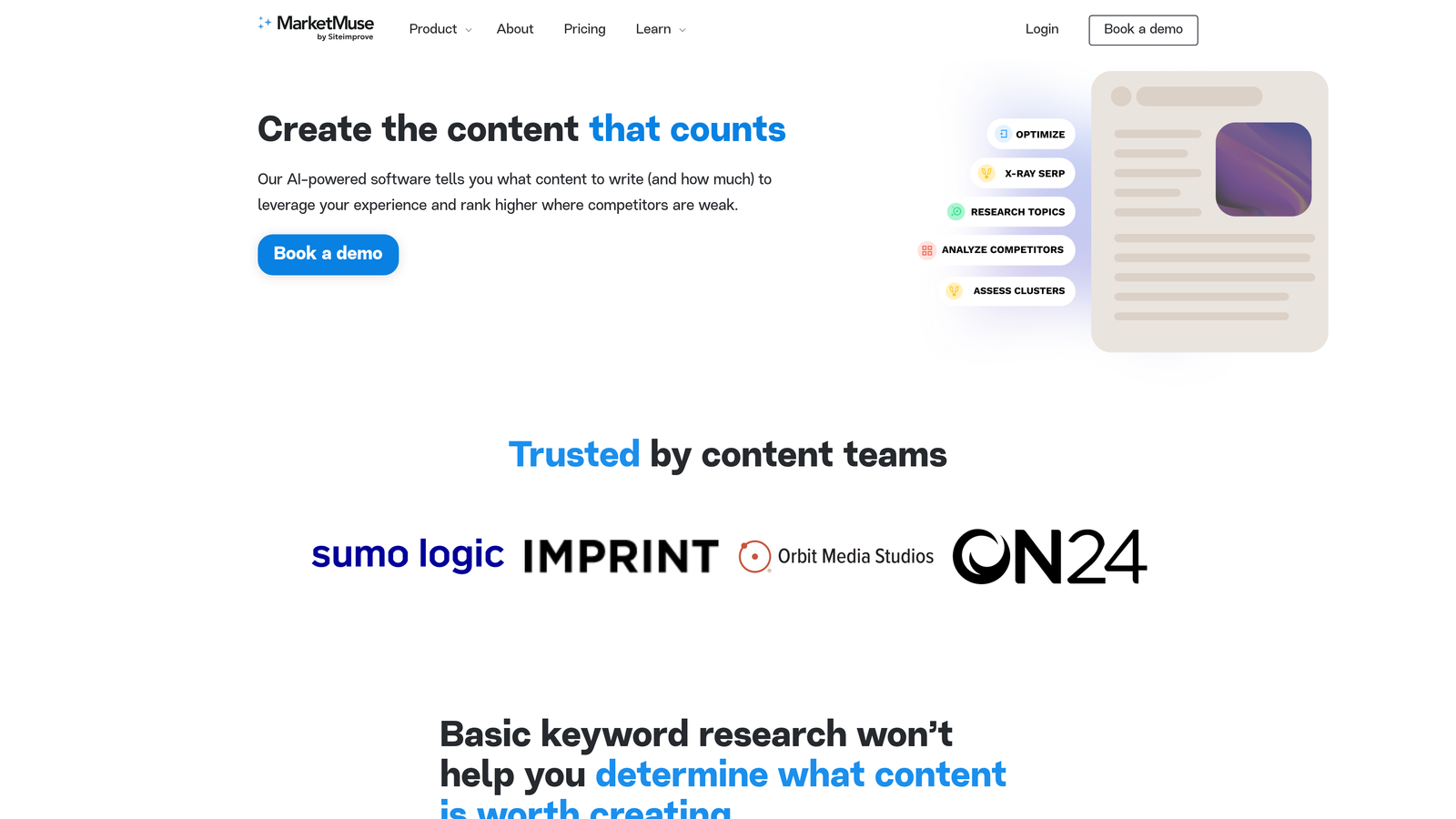
MarketMuse is an AI-driven content strategy platform that uses topic modeling and competitive analysis to identify content gaps and prioritize content investments.
Where This Tool Shines
MarketMuse's personalized difficulty scores are what set it apart from generic keyword tools. Rather than showing you how hard a keyword is to rank for in the abstract, it calculates difficulty based on your site's existing authority in that topic area. This makes content prioritization significantly more accurate, helping teams invest in content where they have a realistic chance of ranking.
The content inventory analysis is another standout feature for enterprise teams. It audits your entire existing content library, identifies gaps in topic clusters, and surfaces opportunities to strengthen existing content rather than always creating new pieces.
Key Features
Personalized Difficulty Scores: Calculates ranking difficulty based on your site's specific topical authority, not generic domain metrics.
Content Inventory Analysis: Full audit of existing content with gap identification and improvement recommendations.
AI Content Briefs: Detailed briefs with topic cluster mapping to guide writers on what to cover and how thoroughly.
Competitive Content Analysis: Benchmarks your content coverage against competitors to identify strategic opportunities.
Content Planning Workflows: Prioritization tools that help teams decide what to write next based on strategic impact.
Best For
Content strategists and SEO leads at established sites with existing content libraries who need to make smarter decisions about where to invest content resources. Less suited for teams just starting out who need volume over strategy.
Pricing
Custom pricing for all plans. MarketMuse discontinued its free tier and now operates entirely on custom-quoted enterprise pricing, negotiated based on content volume and feature access.
8. Copy.ai
Best for: Go-to-market teams that need AI automation across content, sales, and operational workflows.
Copy.ai is an AI platform designed for go-to-market teams, offering pre-built workflow automations that span content creation, sales enablement, and operational efficiency.
Where This Tool Shines
Copy.ai has evolved well beyond a simple AI writing tool. Its GTM workflow automations are pre-built for common go-to-market use cases, meaning teams can deploy functional automations quickly without building them from scratch. This is particularly useful for sales and marketing teams that want AI assistance across the full customer acquisition workflow, not just content production.
The API access and custom integration options make it extensible for technical teams that want to connect Copy.ai's capabilities to proprietary systems or build custom workflows on top of the platform.
Key Features
GTM Workflow Automations: Pre-built automations for common go-to-market processes, deployable without custom development work.
Multi-Format Content Generation: AI writing across blog posts, social content, email sequences, ad copy, and other formats from a single platform.
Sales Enablement Tools: Prospecting and sales content features that extend the platform beyond marketing into revenue operations.
API Access: Developer-friendly API for building custom integrations and extending platform capabilities.
Brand Voice Settings: Team workspace with brand voice configuration to maintain consistency across outputs.
Best For
Revenue-focused teams where content creation is one part of a broader go-to-market motion. Works well for organizations that want a single AI platform spanning marketing content, sales enablement, and operational automation rather than separate tools for each function.
Pricing
Enterprise plan is custom-quoted and typically includes dedicated support, custom workflows, and higher usage limits. Lower-tier Growth plans are available for smaller teams before reaching enterprise scale.
9. Contentful AI
Best for: Enterprise development and content teams running composable, multi-channel content architectures.
Contentful AI delivers AI content generation capabilities natively within Contentful's enterprise headless CMS, enabling content creation and transformation within structured content architectures.
Where This Tool Shines
Contentful AI is fundamentally different from every other tool on this list. It's not a standalone content platform you adopt alongside your CMS. It's AI capability built directly into a headless CMS infrastructure, which means content teams generate and manage AI-assisted content within the same system that powers their website, app, and other channels. For enterprises already running on Contentful, this is a natural extension rather than a separate tool.
The composable content architecture means content created or transformed with AI can be delivered across any channel through the API layer, making it well-suited for organizations managing multiple digital properties from a single content repository.
Key Features
Native AI Generation: AI content creation and transformation built directly into the headless CMS environment, no third-party integration required.
Composable Architecture: Structured content that can be delivered across websites, apps, and other channels through a single API layer.
Content Modeling: Flexible content modeling tools for structuring complex content types across enterprise digital ecosystems.
Extensive API Ecosystem: Developer-friendly APIs and a broad integration marketplace for connecting to other enterprise systems.
Enterprise Security: Enterprise-grade security and scalability features appropriate for large-scale digital operations.
Best For
Enterprises with developer-led content infrastructure who are already using or evaluating headless CMS architectures. Not the right fit for marketing teams looking for a standalone content tool without a technical implementation component.
Pricing
Usage-based pricing with custom enterprise quotes. Pricing is structured around spaces, environments, and API calls, with AI features adding incremental cost on top of base CMS licensing. Total cost of ownership varies significantly based on content volume and delivery scale.
Which Platform Is Right for Your Budget and Use Case
Choosing the right enterprise AI content platform comes down to three questions: What problem are you actually solving? What's your realistic total cost? And what capabilities will you still need to buy elsewhere?
For teams focused on traditional SEO content production, Surfer SEO and Frase offer the most accessible entry points with transparent published pricing. Clearscope and MarketMuse are better fits when content strategy and quality control are the priority over raw volume.
For enterprises with strict governance requirements, Writer stands out. For teams already on Contentful infrastructure, the native AI features are the path of least resistance. For go-to-market teams that need content plus sales automation, Copy.ai covers more of the workflow.
Jasper remains a strong choice for marketing teams with established brand guidelines who need scale and consistency across campaigns.
The most important pricing consideration beyond sticker price is what you're not getting. Most platforms on this list don't address AI search visibility, meaning you'd need additional tools to track how ChatGPT, Claude, and Perplexity represent your brand. That's where Sight AI offers a meaningful consolidation advantage, combining content generation, SEO and GEO optimization, automated indexing, and AI visibility tracking in one platform.
If you're evaluating total cost of ownership rather than just monthly subscription fees, bundling those capabilities matters. Start tracking your AI visibility today and see exactly where your brand appears across top AI platforms, alongside the content tools to improve that presence over time.